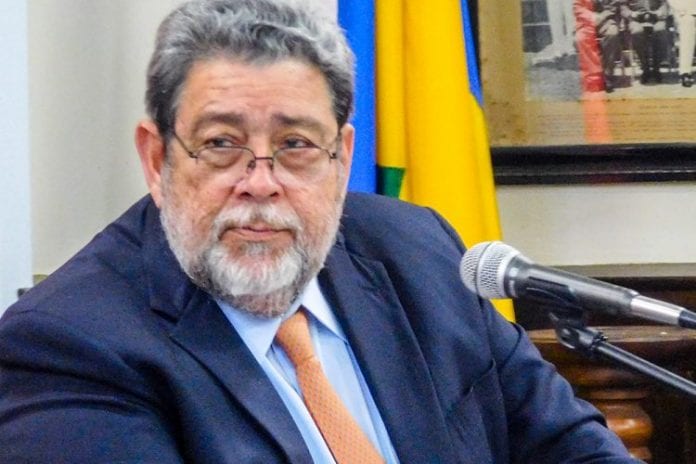
St. Vincent and the Grenadines Opposition Leader Ralph Gonsalves took the oaths of allegiance and declaration as a Member of Parliament on Thursday, clearing the way for his formal participation in parliamentary business ahead of the New Democratic Party (NDP) administration’s presentation of the 2026 Estimates of Revenue and Expenditure.
Gonsalves, whose Unity Labour Party (ULP) suffered a crushing 14–1 defeat in the Nov. 27 general elections, was sworn in one day after House Speaker Ronnia Durham-Balcombe barred him from attending a parliamentary committee meeting on the grounds that he had not yet taken the required oaths.
At 79, Gonsalves—who turns 80 on Aug. 8—is the oldest and longest-serving member of Parliament, now in his 32nd year representing the North Central Windward constituency. He was the lone ULP candidate to retain his seat in the recent polls and had delayed his swearing-in, saying in December that he was considering whether to take the oath at the first sitting of Parliament on Dec. 23 or at a later date.

“The Oath of Allegiance can be done on that day, can be done on any subsequent day,” Gonsalves told reporters at the time, adding that the decision was under “prayerful consideration.” He also asserted that he remained the Leader of the Opposition, appointed by the Governor General under the Constitution.
Also sworn in on Thursday were two opposition senators: Carlos James, who lost the North Leeward seat after one five-year term, and Keisal Peter, a former ULP senator and minister who was unsuccessful in West Kingstown.
Following the obituaries and congratulatory remarks segments, Speaker Durham-Balcombe formally welcomed the opposition members, declaring, “The House is now fully constituted.”
The ULP first came to office in a 12–3 landslide in the March 2001 elections, ending the NDP’s 17-year run that began in 1984. The party secured another 12–3 victory in 2005 but saw its margins steadily narrow in subsequent elections—winning by one seat in both 2010 and 2015, and reclaiming North Leeward by a single vote in 2020.
Despite major development projects, the ULP’s popular support declined after 2005, while the NDP steadily increased its vote share—trends that ultimately culminated in the party’s overwhelming defeat in the 2025 polls.