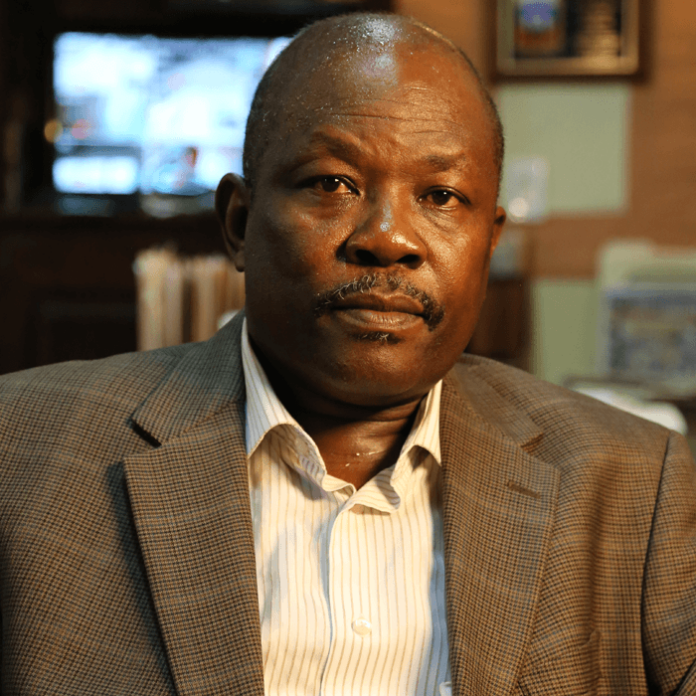
Mario Joseph, a prominent human rights attorney in Haiti who fought against injustice for decades, has died at the age of 62.
Joseph passed away on Monday following a car accident over the weekend, according to the Boston-based Institute for Justice & Democracy in Haiti (IJDH), where he served as managing attorney.
Joseph also co-managed the Bureau des Avocats Internationaux (BAI) in Port-au-Prince, an organization dedicated to representing victims of human rights violations. Over the course of his career, he became widely recognized for his relentless advocacy on behalf of political prisoners, impoverished communities, and victims of political violence. In 2006, The New York Times described him as “Haiti’s most prominent human rights lawyer.”

“Mario never forgot the humble beginnings he came from. Although he won international awards and honorary degrees, he worked tirelessly every day against the injustice that afflicted too many Haitians,” said Brian Concannon, the executive director of the IJDH.
One of Joseph’s most significant legal victories came in 2000 when he led the prosecution in the Raboteau Massacre trial. The trial was described by a United Nations expert as “the longest and most complex” in the history of the Haitian judicial system.
The landmark case stemmed from an April 1994 attack in the coastal town of Gonaïves, where soldiers and paramilitary forces killed more than a dozen people in a pro-democracy neighborhood. The trial resulted in the conviction of 53 defendants, including 37 who were tried in absentia, and civil damages amounting to 1 billion gourdes (roughly $43 million USD). However, Haiti’s Supreme Court later overturned the sentences in what Amnesty International called a politically motivated decision and “a major setback in the fight against impunity in Haiti.”
Joseph also took on powerful international institutions. His firm was instrumental in a claim on behalf of 5,000 cholera victims who blamed the United Nations for introducing the disease to Haiti, which ultimately killed nearly 10,000 people. Additionally, he represented women seeking child support from U.N. peacekeepers who had fathered children and abandoned them.
Born in 1962 or 1963, Joseph received degrees from Haiti’s École Normale Supérieure and Gonaïves Law School before beginning his career with the Catholic Church’s Peace and Justice Commission. He joined the BAI in 1996, where he worked until his death.
Throughout his career, Mario Joseph received numerous accolades, including the Katharine and George Alexander Law Prize from Santa Clara University Law School in 2009 and the Judith Lee Stronach Human Rights Award from the Center for Justice & Accountability. In 2013, he was one of three finalists for the Martin Ennals Award for Human Rights Defenders, which honors individuals and organizations that have shown exceptional commitment to defending and promoting human rights, despite the risks involved.

He delivered the Judge Leon A. Higginbotham Human Rights Lecture at the University of Pennsylvania in 2011 and was recognized by the Center for Constitutional Rights in New York in 2012 for his “extraordinary work.”