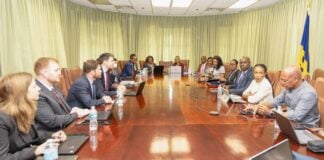
Museum professionals from across the Caribbean will virtually connect in early November to reflect on cultivating resiliency and what it means during a global health crisis.
The Museums Association of the Caribbean (MAC) is devoting its annual conference and general meeting on November 3 to 5 to the theme “Cultivating Resilience in Museums and Cultural Heritage Sites.”
In more than 15 concurrent sessions, museum professionals, including curators, educators, scholars, and researchers, are uniting to discuss themes related to historical sites, indigenous peoples, and social justice.

The “MAC” conference is essential to the Caribbean region because it unites museum “and other cultural heritage” professionals who would otherwise be disconnected.
Over 15 countries are represented in the programming, including St. Maarten, Bermuda, Bahamas, Panama, Haiti, St. Lucia, Dominica, Guadeloupe, Jamaica, the Cayman Islands, United States, and the Netherlands.
MAC is the only museum service organization that caters to the entire Caribbean, says Board President Joanne Hyppolite.
“It is really important for our region because we come from smaller nations that don’t have museum training programs like the bigger countries (Western countries),” Hyppolite says. Hyppolite is of Haitian heritage and is the African Diaspora curator at the Smithsonian National Museum of African American History and Culture in Washington DC.
A group of panelists from Jamaica will present their research on three designated heritage sites in the community of Woodside, St. Mary.
Independent scholar, Dr. Erna Brodber, the Jamaica Hummingbird Tribe representatives Yukayeke Yamaye Guani (Robert A. Pairman), and Kasike Kalaan Nibonrix Kaiman, and marketing strategist, Klao Bell-Lewis will share “The Ancestral Gardens (Woodside, St. Mary): Sacred Tourism — A Mighty Long Way To Go” which highlights the Taino Steps, a former plantation, St. Gabriel’s Anglican Church which used to be a great house, and Daddy Rock, a former meeting ground for enslaved people.

These cultural sites bring together the Amerindian, African and European ancestry of the Woodside community. In the presentation, the scholars will discuss ways to manage the use and visitation of sacred spaces while promoting access and ownership by community members.
Panel sessions will allow attendees to gain in-depth knowledge on a variety of subjects; however, the conference also offers opportunities to connect socially. Board President Joanne Hyppolite also highlights plenaries featuring chefs from various islands, the popular speed networking event, guided meditations, “mix and sip” social mixers led by Caribbean mixologists, and a virtual museum tour of cultural heritage spaces in The Bahamas as additional. The conference will close with a live musical performance by Barabbas and The Tribe, a carnival band.
At a time of separation, “MAC is a breeding ground for ideas, but it is also a fertile ground to plant ideas,” says Sherene James-Williamson, geologist, curator, and senior lecturer at The University of the West Indies, Mona.
James-Williamson, whose presentation is on geodiversity and the role of heritage, is looking forward to brainstorming and continuing to build a future with colleagues who share similar experiences.
“Once MAC people meet up, we’ve gone beyond a melting pot,” she says. “We are a big boiling pot of soup, and out of it, I can say many are fed.”