South Florida’s urban landscape is changing, and its leaders are thinking outside the box to address the pressing issue of affordable housing. With scarce land for new construction, mayors and county officials in the region are reimagining the future.
Innovative approaches amidst skyrocketing prices
They are advocating for governmental funds to encourage the expansion of apartment buildings rather than concentrating on single-family homes.
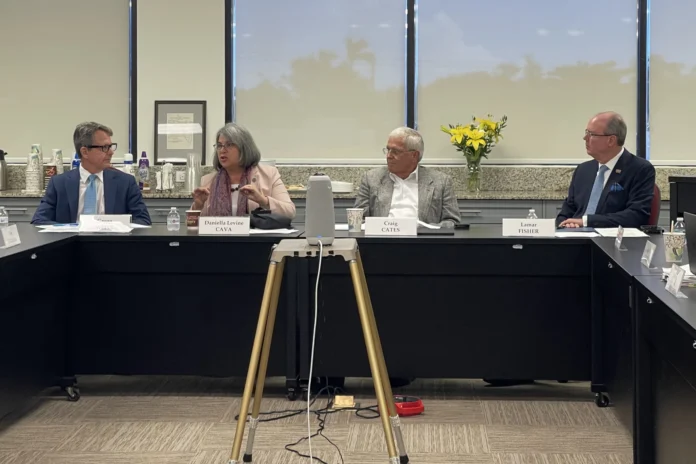
At a recent meeting hosted by the South Florida Regional Planning Council, key figures like Broward County Mayor Lamar Fisher, Miami-Dade County Mayor Daniella Levine-Cava, Monroe County Mayor Craig Cates, and Palm Beach Mayor Gregg Weiss, gathered to outline their legislative priorities. Their unanimous concern: alleviating the area’s affordable housing crisis.

A region in need
Due to the rising cost of living in the area, South Florida has set aside a sizeable percentage of its annual budget to support affordable housing developments. This is one of the most expensive cities in the country to live in, with a startling median monthly rent of $2,511.
For Monroe County residents, approximately 44% of them face the burden of allocating 30% or more of their income towards rent or mortgage payments, according to the Federal Reserve, which tracks “cost-burdened” households nationwide.
“I think we need to concentrate our efforts on things that have the best chance of passage,” Council chairman, Steve Geller, a Broward County Commissioner, informed the group.


Shifting the paradigm
To tackle this growing problem, officials are advocating for amendments to the State Housing Initiatives Partnership Program (SHIP). Currently, the program aids counties in funding affordable housing, but primarily favors homeownership over rental housing, resulting in an influx of single-family homes.
“We need to change the formula so that the counties that are built-out and need to use more funding for multi-family homes can do that,” Broward County Vice-Mayor, Nan Rich, said.
She also suggests a shift that would allocate 50% of the funding for single-family homes, and the remaining half for multi-family structures like apartment complexes. This proposal provides counties with the flexibility to decide which allocation suits their unique needs best.

Legislative initiatives
Earlier this year, the Florida Legislature demonstrated its commitment to affordable housing through the Live Local Act. This policy supports mixed-use buildings in struggling business zones and stimulates investments in affordable housing. However, it also limits municipal rent restrictions and, in some cases, preempts local government rules on zoning, density, and building heights.
Going Vertical
South Florida officials acknowledge that the solution lies in building upwards. According to the FIU Metropolitan Center’s Affordable Housing Needs Assessment report last year, the most significant increase in housing units in Broward County from 2017 to 2020 was multi-family structures with 20 or more units.
Still, according to the report, about 40% of Broward County households reside in rental units, emphasizing the need for affordable high-rise options.
“Real estate is just not there so you have to go vertical, and you have to create opportunities to build even higher to accommodate affordability,” said Broward County Mayor Lamar Fisher.
As South Florida grapples with the ever-growing demand for affordable housing, its leaders are determined to reshape the narrative, ensuring that their communities remain accessible to all.
According to census data, the four counties make up nearly 28 percent of the state’s population.