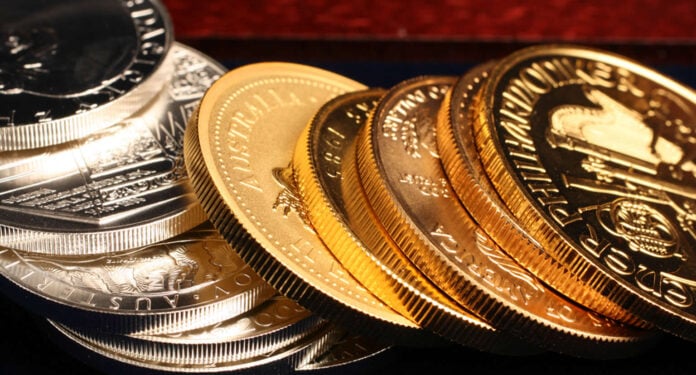
In a move aimed at bolstering financial independence from the federal government, Florida Gov. Ron DeSantis on Tuesday signed into law HB 999, a bill that will allow residents to use gold and silver coins to pay government bills.
The bill was signed in Apopka, where DeSantis framed it as a step toward restoring “real currency” in the state economy.
“That means these precious metals can start functioning like real currency again, not just investment vehicles for the wealthy,” DeSantis said at the bill signing. He also noted that Florida is the first large state to offer such an option.

Sponsored by State Rep. Doug Bankson, R-Apopka, the bill was passed by the Florida Legislature last month. It is rooted in Article I of the U.S. Constitution, which prohibits states from coining their own money but permits them to “make gold and silver coin a tender in payment of debts.” Under HB 999, gold and silver coins that qualify as “legal tender” will be exempt from Florida’s sales tax and will be permitted as payment to government agencies via electronic transfers or debit cards.
Bankson said the legislation aims to help Floridians reclaim purchasing power lost since the United States left the gold standard under President Richard Nixon in 1971.
“Since then, we’ve seen over a 90% decrease in its buying power,” Bankson said. “One of the illustrations that I’ve used with people and used in committee and with different representatives, if you bought a home in 1979, the average cost was $75,000. Those were the days. If you bought that same home, that same product, now, it would be $531,000. However, if you had bought that in gold in 1979, it would have been 268oz. Today, if you bought that home, 268oz. Why? Because it’s a tangible thing that has true value.”

The law also instructs Florida’s chief financial officer to create a regulatory framework to facilitate these transactions. That includes setting standards for public deposits of gold and silver, licensing custodians to handle the coins, and establishing rules for storage, security, and insurance. These proposed rules must be submitted to the governor and the legislature by November 1, 2025, and must be ratified by lawmakers. If approved, the law will go into effect on July 1, 2026.
While Florida’s move paves the way for precious metals to be used in state-level transactions, federal tax rules still apply. The U.S. government classifies gold and silver coins and bullion as collectibles, which means their sale remains subject to federal capital gains taxes.