Governor Ron DeSantis’ proposed “Floridians First” budget includes sweeping new investments in education, environmental restoration, housing, child welfare, mental health, and cancer research, according to documents released Tuesday.

The budget recommends a historic $30.6 billion for Florida’s K-12 system — the highest in state history — including $9,406 per student, an increase of $279 over last year. It sets aside $1.56 billion to raise salaries for teachers and instructional personnel, along with $1.71 billion for early-childhood programs such as Voluntary Prekindergarten. Officials estimate nearly 476,000 students will participate in the Family Empowerment Scholarship program.
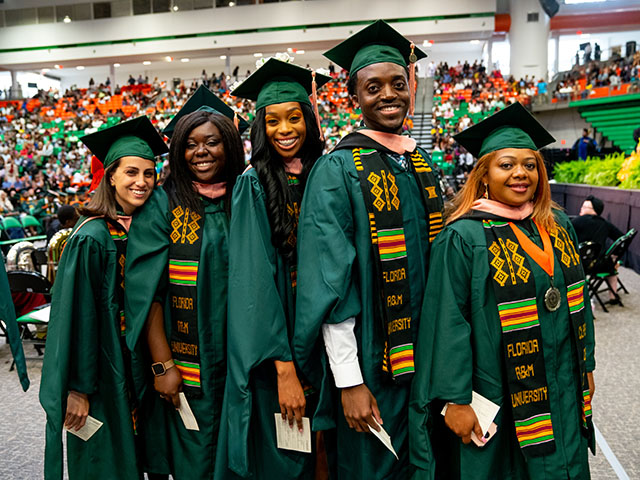
For higher education, the budget proposes $1.9 billion for the Florida College System, $4 billion for the State University System, $100 million for faculty recruitment and retention, and $146 million for the state’s four Historically Black Colleges and Universities. Workforce education investments total $800 million, including $130 million for nursing programs and $100 million for career and technical education expansion.

Environmental spending represents another major pillar. The proposal includes $1.4 billion for Everglades restoration and water quality — bringing total Everglades-related investment under DeSantis to nearly $9.5 billion. Of that amount, $810 million goes toward restoration, including $681 million for the Comprehensive Everglades Restoration Plan and $586 million to fully fund remaining state-supported components of the Central Everglades Planning Project and the EAA Reservoir.
Additional water-quality funding includes $150 million for upgraded wastewater and stormwater projects, $100 million for the Indian River Lagoon and Biscayne Bay, $50 million for projects aimed at meeting nutrient-reduction goals, and $100 million for the Lower Kissimmee Basin Stormwater Treatment Area. The budget also provides $50 million for springs protection, $65 million for algal-bloom mitigation, and $60 million for alternative water-supply projects.
The spending plan expands support for housing with $170.8 million for the State Housing Initiatives Partnership program, $72.9 million for the State Apartment Incentive Loan program, and $50 million for the Hometown Heroes Housing program, which assists law enforcement officers, educators, healthcare professionals, firefighters, childcare workers, and veterans with down payment and closing costs.
Child welfare funding totals $36.6 million, including increased support for Community-Based Care Lead Agencies, adoption subsidies, foster parent cost-of-living adjustments, and services for youth in Extended Foster Care. Another $1 million will fund statewide digital recruitment for foster parents and Guardian ad Litem volunteers.
The budget also proposes $159 million for behavioral health services, $187 million in statewide opioid-settlement spending, and $31.8 million to continue expanding the CORE Network for substance-abuse recovery.
Cancer research receives a combined $278 million, including $40 million for the Cancer Connect Collaborative Research Incubator and $197.5 million through a newly consolidated Casey DeSantis Cancer Innovation, Care, and Research Program. An additional $5 million is designated to expand testing for contaminants such as heavy metals, bacteria, pesticides, and microplastics.

Other major health and family investments include $3 million for Alzheimer’s programs, $7.5 million for elderly care services, more than $20 million to serve individuals with disabilities through the Home and Community-Based Services Waiver, and $8.6 million for capital improvements to veterans’ nursing homes.