All 283 Miami-Dade County public schools now have access to comprehensive, on-campus healthcare services aimed at keeping students healthy and reducing absenteeism, officials announced Tuesday. The expansion, part of the HealthConnect initiative, includes primary care, dental, vision, mental health services, and management of chronic conditions such as asthma, diabetes, and seizures.

Backed by a $25.8 million annual investment from The Children’s Trust—a locally funded organization supported through property taxes—the expansion represents a 29% increase over last year and doubles the number of schools participating in the program. Mobile health units will also make regular stops, ensuring students at schools without permanent clinics still receive specialized care.
“For kids to be able to walk into a clinic in school, access care, first aid, routine medical services, or respond to emergencies, it has a profound impact,” said James Haj, CEO and President of The Children’s Trust. He added that mental health support is now a major component, with licensed professionals available during and after school hours for therapy or telehealth visits.

Students from prekindergarten through 12th grade can receive free screenings for vision, body-mass index, and scoliosis, as well as telehealth visits, vaccinations, and chronic condition management. While some services, such as scoliosis checks, are mandated by state law, others—including mental health care—require parental consent. Parents can contact their schools to enroll children in the program.
The HealthConnect initiative operates through a combination of on-site clinics, mobile health units, and virtual care. Medical teams are provided by partner organizations, including Citrus Health Network, Community Health of South Florida, Jessie Trice Community Health System, Nicklaus Children’s Hospital School Health Program, the University of Miami Health System, and Hazel Health.
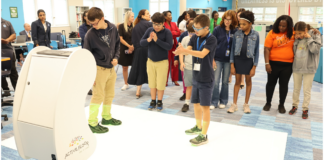
Haj, a former high school principal, highlighted the difference school-based clinics make in keeping students in class and providing care efficiently. “How did schools survive before there were clinics for kids to be able to go in and access care?” he asked during a program event at Spanish Lake Elementary, where one of three mobile health units was deployed.
The program ensures that students, families, and the broader community can benefit from accessible healthcare without missing class or work, addressing both physical and mental health needs year-round.