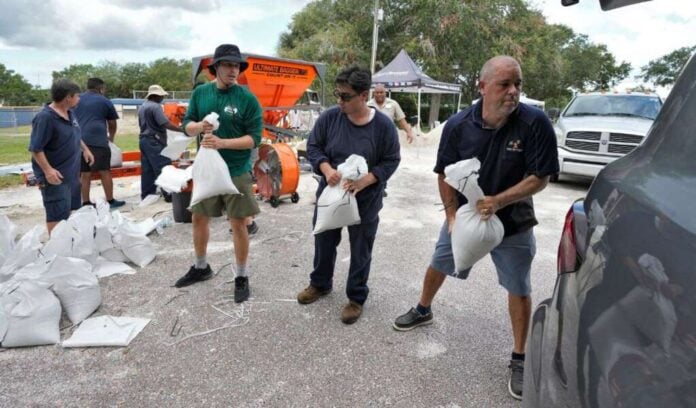
Residents in Florida have shifted into high-alert mode in preparation for Hurricane Idalia’s landfall on the Gulf Coast on Wednesday.

The storm is predicted to become an “extremely dangerous major hurricane.”
The state is still grappling with residual damage from last year’s Hurricane Ian.


More on Hurricane Ian’s impact on Florida
- Florida needs $33 billion for Hurricane Ian recovery
- Hurricane Ian closes some Florida schools indefinitely
- Florida deaths rise to 47 amid struggle to recover from Hurricane Ian
Emergency measures in full swing
Governor Ron DeSantis activated the state’s emergency protocols, waiving tolls on highways leading out of at-risk zones.
Evacuation shelters have opened their doors, hotels are ready to accommodate evacuees, and a workforce of over 30,000 utility professionals is positioned to restore services post-hurricane.
More on Hurricane Idalia
Guidance on evacuation
Governor DeSantis urged residents to seek refuge in secure structures on higher ground, emphasizing that long-distance evacuation was not necessary. He advised Floridians to complete their preparations promptly.

Storm statistics and trajectory
Reports are that as of 8 a.m. EDT on Tuesday, Hurricane Idalia was situated approximately 320 miles south-southwest of Tampa. It recorded maximum sustained winds of 80 mph and was moving north at a pace of 14 mph.
The storm’s center is anticipated to impact a sparsely populated region along the Gulf Coast, known as the Big Bend, before advancing across the peninsula and affecting parts of southern Georgia and the Carolinas.
Forecasters highlight that storm surge remains the most significant threat, with estimates suggesting an 8 to 12-foot rise above normal tide levels in specific areas.

Public transportation shut down
Airports including Tampa International and St. Pete-Clearwater International announced closures on Tuesday. Similarly, Orlando’s Sunrail commuter rail service has been temporarily suspended as the state readies itself for the approaching hurricane.
Idalia’s wider impact
Prior to approaching Florida, Idalia unleashed heavy rainfall over Cuba, particularly affecting its westernmost region, Pinar del Rio. This province, a major tobacco producer, was already in a state of recovery after being hit by Hurricane Ian.
Hurricane Idalia marks Florida’s first storm this hurricane season but joins a list of other natural disasters that have unfolded this summer, including wildfires in Hawaii, Canada, and Greece, California’s first tropical storm in 84 years, and severe flooding in Vermont.