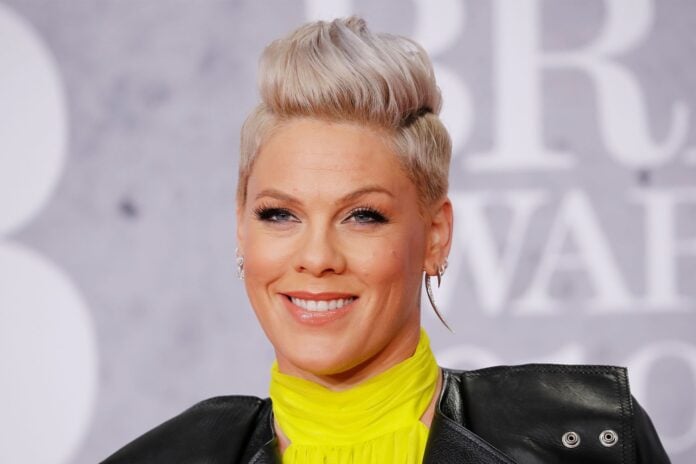
During her 2023 Trustfall Tour in Florida, global pop icon P!nk has taken a stand against book banning.
In collaboration with PEN America and the Florida bookseller Books & Books, P!nk on Monday announced her initiative to distribute 2,000 banned books at her Florida concerts.
This move is a direct response to the increasing instances of book banning, particularly those that explore themes of race, racism, and LGBTQ topics.

P!nk emphasized her lifelong love for books and her determination to oppose the suppression of literature.
During P!nk’s Miami concert at the Kaseya Center on Tuesday, attendees were greeted with stacks of books. Reports are that the effort continues at her upcoming Sunrise performance on Wednesday, as part of her tour.
PEN America’s stance against book banning
PEN America, represented by Kasey Meehan, highlighted the non-neutrality of book banning, emphasizing its impact on restricting access to diverse and inclusive literature.

During the concerts, P!nk is distributing four significant titles: “The Family Book,” by Todd Parr, “The Hill We Climb,” by Amanda Gorman, “Beloved,” by Toni Morrison, and a book from “Girls Who Code,” founded by Reshma Saujani.
This collaboration was first announced in an Instagram live session with P!nk, PEN America CEO Suzanne Nossel, and author Amanda Gorman.
This announcement followed the revelation of a list of approximately 300 books removed from Florida’s school libraries in 2022, many of which include LGBTQ themes or characters.

The situation in South Florida
In South Florida, there has been less removal of books.
Notably, Miami-Dade County, Monroe, and Palm Beach have reported no instances of book removal. However, Broward County stands out with the removal of three titles from its bookshelves.
While South Florida has seen fewer book removals, with areas like Miami-Dade County, Monroe, and Palm Beach reporting zero removals, Broward County experienced the removal of three titles.
Overall, around 300 books have been removed from public school libraries across Florida.
This widespread removal has sparked significant concern among advocates for free expression and diversity in literature.