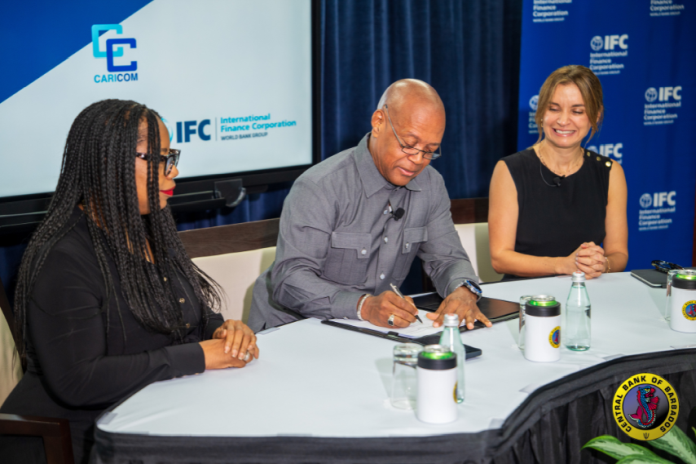
English-speaking Caribbean nations are poised to benefit from a new regional green finance taxonomy designed to unlock climate investment and accelerate inclusive, sustainable growth. The initiative is part of a cooperation agreement announced Wednesday between the CARICOM Committee of Central Bank Governors and the International Finance Corporation (IFC), a member of the World Bank Group.

The move will create a standardized framework to define and classify green assets, making it easier for financial institutions to channel private capital into climate-friendly projects—such as renewable energy systems and hurricane-resilient infrastructure. The taxonomy is expected to deepen climate finance markets, expand access to green lending, and boost job creation across the region.
“This partnership with IFC represents a pivotal moment for the Caribbean’s financial resilience and climate adaptation efforts,” said Dr. Kevin Greenidge, Governor of the Central Bank of Barbados and Chairman of the CARICOM Committee. “By establishing clear green finance guidelines, we’re creating the infrastructure needed to channel more private capital toward climate-resilient projects… to build back better and stronger after each climate shock.”

IFC Caribbean Regional Manager Ronke-Amoni Ogunsulire underscored the urgency of the initiative, noting that Caribbean small island developing states face a climate finance gap of nearly US $55 billion by 2030. “A robust private sector and deeper climate finance markets are essential to supporting the region’s adaptation efforts and unlocking a sustainable future for its people,” she said.
The IFC will execute the project through its Financial Institutions Group Advisory Services for Latin America and the Caribbean, in collaboration with its Country Advisory and Economics team. The taxonomy will align with global market standards and include input from financial regulators, institutions, and supervisory bodies to reflect the region’s unique economic and climate realities.
The Caribbean is one of the most climate-vulnerable regions in the world. With tourism accounting for nearly 14% of regional GDP, and natural hazards causing an average loss of 3.6% of GDP annually, countries face mounting economic and environmental pressures. Despite contributing less than 1% of global greenhouse gas emissions, Caribbean nations bear a disproportionate share of climate-related costs—many of which are financed through public debt. At the end of 2023, the region’s debt-to-GDP ratio stood at 77%, far above safe thresholds.
The IFC-CARICOM green finance taxonomy is seen as a critical step toward building more climate-resilient financial systems, strengthening the region’s ability to weather economic shocks, and creating new opportunities for sustainable development.
For more information, visit www.ifc.org.