Haitian repatriated from Portland tested positive for Malaria
Key Points(5)
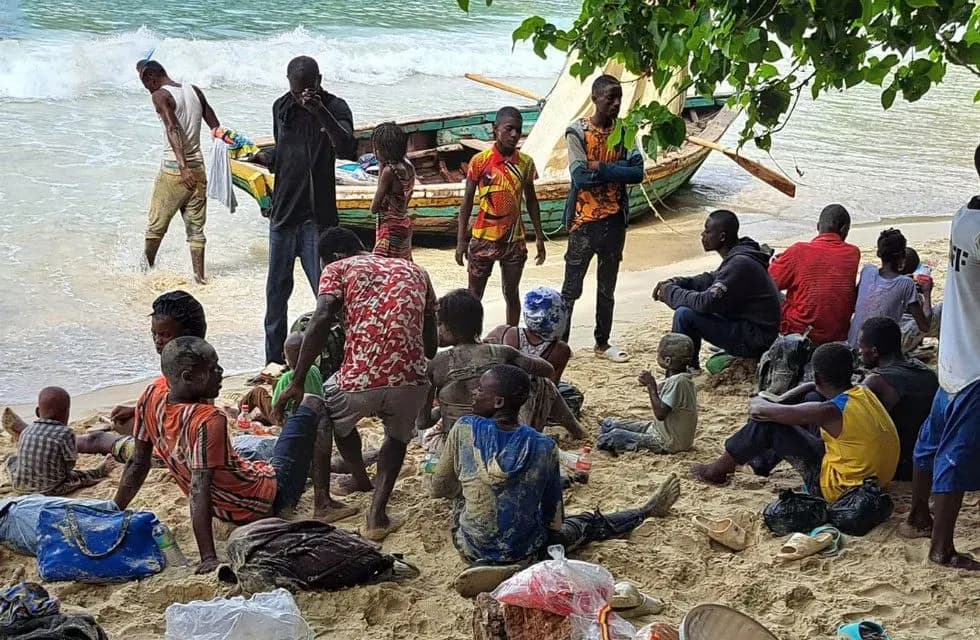
- One of the 42 Haitians who landed at Ross Craig, Long Bay, Portland, on May 18 tested positive for malaria before being repatriated to Haiti two days later.
- The disclosure was made by Dr.
- Sharon Lewis, Portland’s Medical Officer of Health, during a meeting of the Portland Municipal Corporation on Thursday.
- Lewis explained that after the group of Haitians arrived by boat, they were processed at Port Antonio Hospital, where routine tests were conducted.
- “One adult male tested positive for the malaria parasite; however, the result returned two days after he was repatriated.
One of the 42 Haitians who landed at Ross Craig, Long Bay, Portland, on May 18 tested positive for malaria before being repatriated to Haiti two days later.
The disclosure was made by Dr. Sharon Lewis, Portland’s Medical Officer of Health, during a meeting of the Portland Municipal Corporation on Thursday.
Dr. Lewis explained that after the group of Haitians arrived by boat, they were processed at Port Antonio Hospital, where routine tests were conducted.
“One adult male tested positive for the malaria parasite; however, the result returned two days after he was repatriated. This male had no fever or other symptoms on presentation; he only gave a history of fever a long time ago,” said Dr. Lewis.
She noted that the vector control team acted swiftly to contain any possible risk by destroying the boat and conducting fogging in the landing area to limit the spread of any mosquito-borne or viral diseases.
“The vector control team promptly destroyed the boat and conducted fogging in the landing area to reduce the spread of any other viral diseases that those who arrived may have had,” Dr. Lewis said, while warning against harbouring undocumented visitors and the health threats that may arise.
“I use the opportunity to warn the public that malaria in a person from a country where the disease is endemic often presents with mild symptoms, and as in the case with that man, no symptoms. In this case, the male had no symptoms,” she added.
“That is why we warn our citizens to alert the police and the health team when persons who are not Jamaicans arrive by boat on our shores without going through the official ports. These persons should be assessed immediately after their arrival so that we can take the necessary public health measures to protect our citizens from the possible introduction or reintroduction of infectious diseases to our country.”
Jamaica was first certified malaria-free by the World Health Organization (WHO) in 1965 and was reinstated on the official register of areas where malaria eradication was achieved in 2012.
Since then, the country has recorded only imported cases of malaria, a mosquito-borne disease caused by the malaria parasite, which is transmitted to humans by the bite of infected female Anopheles mosquitoes.
Through strong surveillance and timely public health responses, Jamaica has been able to prevent the reintroduction of malaria, even when imported cases have occurred.