Haitian advocacy group opposes US terrorist label for gangs
Key Points(5)
- Secretary of State Marco Rubio announced that both groups would be designated not only as FTOs but also as Specially Designated Global Terrorists (SDGTs), citing their escalating violence and destabilizing presence in Haiti.
- According to <a href="https://www.state.gov/releases/office-of-the-spokesperson/2025/05/terrorist-designations-of-viv-ansanm-and-gran-grif/#:~:text=Haitian%20gangs%2C%20including%20the%20Viv,security%20interests%20in%20our%20region.">Rubio</a>, the gangs “are a direct threat to U.S.
- law, an FTO must be a foreign organization that engages in terrorism and threatens U.S.
- national security or the safety of Americans.
- HBA also echoed concerns raised by U.S.
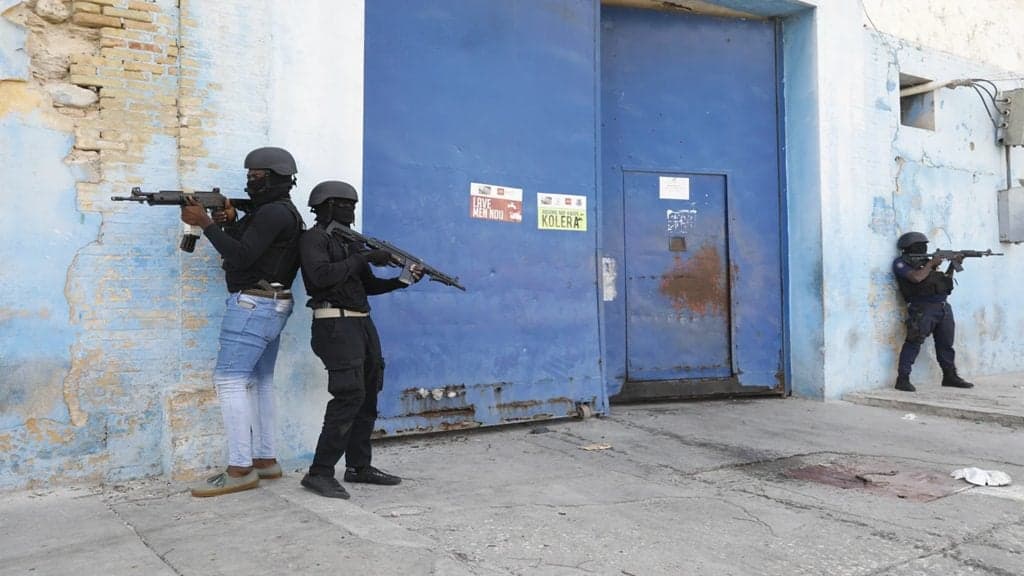
The Haitian Bridge Alliance (HBA), a California-based human rights organization, is urging the Trump administration to reverse its recent designation of two powerful Haitian gangs—Viv Ansanm and Gran Grif—as Foreign Terrorist Organizations (FTOs), warning that the move could worsen the humanitarian crisis in Haiti.
Last Friday, U.S. Secretary of State Marco Rubio announced that both groups would be designated not only as FTOs but also as Specially Designated Global Terrorists (SDGTs), citing their escalating violence and destabilizing presence in Haiti. According to Rubio, the gangs “are a direct threat to U.S. national security interests in our region,” and are responsible for deadly attacks on civilians, security forces, and international peacekeeping personnel.
But HBA’s Executive Director, Guerline Jozef, strongly criticized the move, arguing that it mischaracterizes the gangs’ criminal behavior as terrorism and could have far-reaching negative consequences.
“Haitian gangs, while undeniably violent and destabilising, are criminal in nature, not ideological,” Jozef told the Caribbean Media Corporation (CMC). “Their motives are rooted in territorial control, extortion, and survival amid state collapse, not in political or religious extremism.”
She warned that the designation is “legally unsound, diplomatically damaging, and devastating to innocent Haitians.” Under U.S. law, an FTO must be a foreign organization that engages in terrorism and threatens U.S. national security or the safety of Americans. Jozef said the Haitian gangs do not meet that threshold and that labeling them as such could criminalize survivors and block aid efforts.
“A Foreign Terrorist Organisation designation would not weaken the gangs—it would criminalise survivors, block humanitarian aid, and escalate deportations of people fleeing for their lives,” she said.
The advocacy group is calling instead for the administration to pursue “targeted sanctions” under the Global Magnitsky Act. HBA also echoed concerns raised by U.S. Congressman Gregory Meeks, who argued that any designation not paired with a comprehensive strategy to dismantle gang networks could be “counterproductive” and increase suffering for ordinary Haitians.
Jozef laid out a series of alternative measures, urging Washington to:
-
Increase targeted sanctions on gang financiers, arms traffickers, and corrupt elites, including U.S. citizens;
-
Restrict the flow of weapons into Haiti from the U.S. and via neighboring countries like the Dominican Republic;
-
Bolster funding for the Haitian National Police and other local security forces;
-
Invest in rebuilding Haiti’s state institutions and civil society;
-
Expand legal immigration pathways for Haitians fleeing violence;
-
Appoint a Special Envoy from the Haitian diaspora to advise the White House.
“This designation would also trigger immigration bars under U.S. law, punish victims coerced by gangs under the ‘material support’ doctrine, and deter NGOs from delivering aid,” Jozef added.
HBA described the U.S. approach as part of a “troubling precedent” of using counterterrorism tools to respond to complex political and social issues in the Western Hemisphere.
In defending the designation, Rubio emphasized that Viv Ansanm and Gran Grif have carried out deadly operations aimed at overthrowing the Haitian government. He noted that Gran Grif has been linked to 80% of civilian deaths in Haiti’s Artibonite region since 2022, while Viv Ansanm, formed last year, is a coalition between two dominant gangs in Port-au-Prince: G-9 and G-Pép.
“Engaging in transactions with members of these groups entails risk in relation to counterterrorism sanctions authorities, not only for Haitians but also for U.S. lawful permanent residents and U.S. citizens,” Rubio said.
He added that individuals and entities found providing material support to the designated gangs could face prosecution and be barred from entering or remaining in the U.S.
Despite the administration’s position, HBA is calling on regional bodies like the Caribbean Community (CARICOM) and the Organisation of American States (OAS) to speak out against the designation and advocate for a response grounded in justice and human rights.
“Haitian Bridge Alliance remains committed to advocating for policy rooted in justice, strategy, and humanity,” said Jozef. “We call on the State Department to reverse this designation and instead lead a principled, effective response that empowers Haitians, not punishes them.”