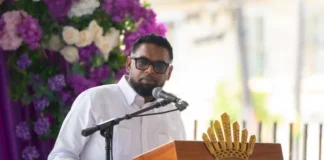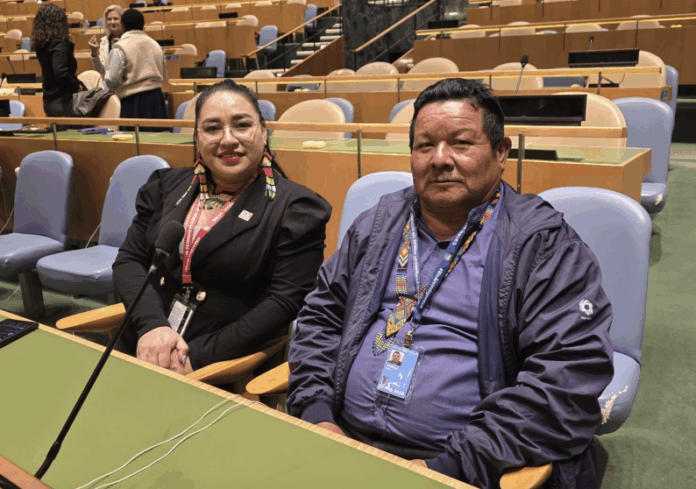
The President of the Amerindian Peoples Association (APA), Mario Hastings, delivered a blistering critique of the Government of Guyana’s treatment of Indigenous communities, telling a global audience that Indigenous rights to land and self-determination are being systematically violated.

Speaking at the 24th Session of the United Nations Permanent Forum on Indigenous Issues (UNPFII) on Wednesday, Hastings accused the government of ignoring Indigenous peoples’ ownership of their ancestral lands and exploiting their resources without proper consultation or consent. “In Guyana, Indigenous Peoples, despite having titles to our lands, have no ownership over the resources from them, nor are we consulted when these resources want to be exploited by companies or our government,” Hastings told the Forum.
Hastings painted a stark picture of life for Guyana’s Indigenous communities, describing a reality where their sacred lands are being stripped and rivers are poisoned by extractive industries — all without a seat at the decision-making table. “We are witnessing the reckless seizure of our lands and resources without a seat at the decision-making table to avoid the devastation that such actions can cause,” he said, calling it a betrayal cloaked in the name of economic development.

Despite Guyana’s endorsement of the United Nations Declaration on the Rights of Indigenous Peoples (UNDRIP), Hastings said national laws, including the outdated 2006 Amerindian Act, remain unreformed. Critically, he noted that the principle of Free, Prior, and Informed Consent (FPIC) is still not legally protected — leaving communities vulnerable to decisions made without their input.
One recent flashpoint has been the government’s Low Carbon Development Strategy (LCDS) and the sale of carbon credits, which Hastings said was finalized without genuine consultation. “The processes arriving to this agreement were deeply flawed. Again, we were not properly consulted in how our forests and lands would be used in this scheme,” he stated.
Calling for urgent action, the APA urged the Government of Guyana to finally revise the Amerindian Act in line with UNDRIP standards and to meaningfully incorporate the recommendations made by Indigenous Villages and District Councils. Hastings also called on the UN Permanent Forum to closely monitor Guyana’s actions to ensure Indigenous communities are not sidelined once again.
“Stronger incorporation of the UNDRIP would increase the protections of our rights and ensure that they are respected and upheld, rather than overridden by corporate or state interests,” Hastings emphasized.
The APA’s strong stance at the UN reflects growing tensions between Indigenous communities and governments across the region, as the push for economic development increasingly collides with the rights of the original custodians of the land.