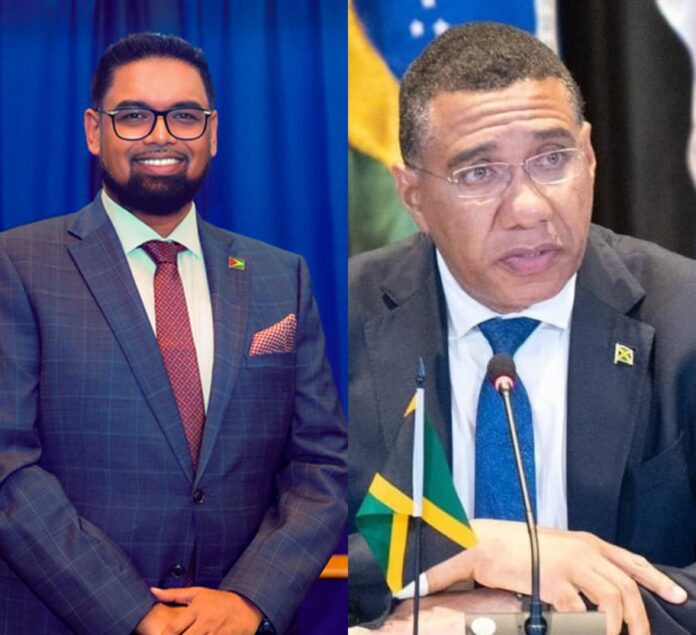
Next week will be a decisive one for Caribbean democracy, as Guyana and Jamaica, two of the region’s most influential nations, head into high-stakes general elections that could alter their political landscapes and set the tone for the decade ahead.
On September 1, 2025, Guyanese voters will go to the polls in a contest that has already been marred by fiery rhetoric and fears of unrest. Incumbent President Dr. Irfaan Ali of the People’s Progressive Party/Civic (PPP/C) is seeking a second and final term after his party’s narrow majority in 2020. His rival, Aubrey Norton, who leads the People’s National Congress Reform (PNCR) within the APNU+AFC coalition, is mounting a fierce challenge. The stakes could hardly be higher: Guyana is now the world’s fastest-growing economy, fueled by vast offshore oil discoveries, and the outcome of this election will determine how the country manages both newfound wealth and deep-seated divisions.
Campaigns in Guyana have reached a fever pitch, with leaders trading blistering accusations at weekend rallies. Vice President Bharrat Jagdeo told PPP/C supporters in Stewartville that the police and army were “ready to take on anyone” seeking to disrupt the vote, predicting a “decisive, overwhelming victory.” Across the East Coast in Plaisance, Norton dismissed Jagdeo as a “complete idiot” and warned the ruling party not to cling to power if defeated. He told supporters that APNU was prepared to resist “subjugation,” reviving memories of Guyana’s turbulent electoral history.

The potential for confrontation has drawn regional concern, with CARICOM observers expected to be on the ground alongside international monitors. Members of the Disciplined Forces have already cast their ballots, the first phase of an election that will test Guyana’s institutions and its ability to balance prosperity with stability.
Just two days later, on September 3, Jamaicans will elect a new Parliament in a contest framed around the country’s economic direction and quality of life. Prime Minister Andrew Holness is campaigning for another term, touting infrastructure projects and tax reforms. His challenger, Mark Golding of the opposition People’s National Party (PNP), has pledged bold measures to ease the burden on working families, including eliminating income tax for those earning $3.5 million or less annually.
The Jamaica Labour Party, meanwhile, is promising to gradually reduce the personal income tax rate from 25 percent to 15 percent, while introducing a sweeping national health plan for seniors, with eventual universal coverage. Both manifestos lay out competing visions for economic growth and social protection in a country where the cost of living and public safety remain top voter concerns.
Preparations have already begun in Jamaica are also in full swing. On August 29, special services voters—including police, military personnel, and election workers cast their ballots ahead of the general electorate. The Electoral Office of Jamaica (EOJ) has designated more than 200 polling locations for the special vote, underscoring the scale of the operation. Officials insist that systems are in place to ensure a smooth election day.
For both Guyana and Jamaica, the outcomes will be closely watched across the region. Guyana’s trajectory as an oil-rich state makes its vote one with global economic implications, while Jamaica’s political leadership continues to shape Caribbean diplomacy, trade, and cultural influence. Together, the back-to-back elections will test the resilience of two democracies under pressure and could redefine leadership in the Anglophone Caribbean.