Grenada cautious over US request to install radar at Maurice Bishop Airport

Key Points(5)
- The Grenada government says it will not enter into any agreement that could violate regional, domestic, or international law, as discussions continue over a U.S.
- request to install radar equipment at the Maurice Bishop International Airport (MBIA).
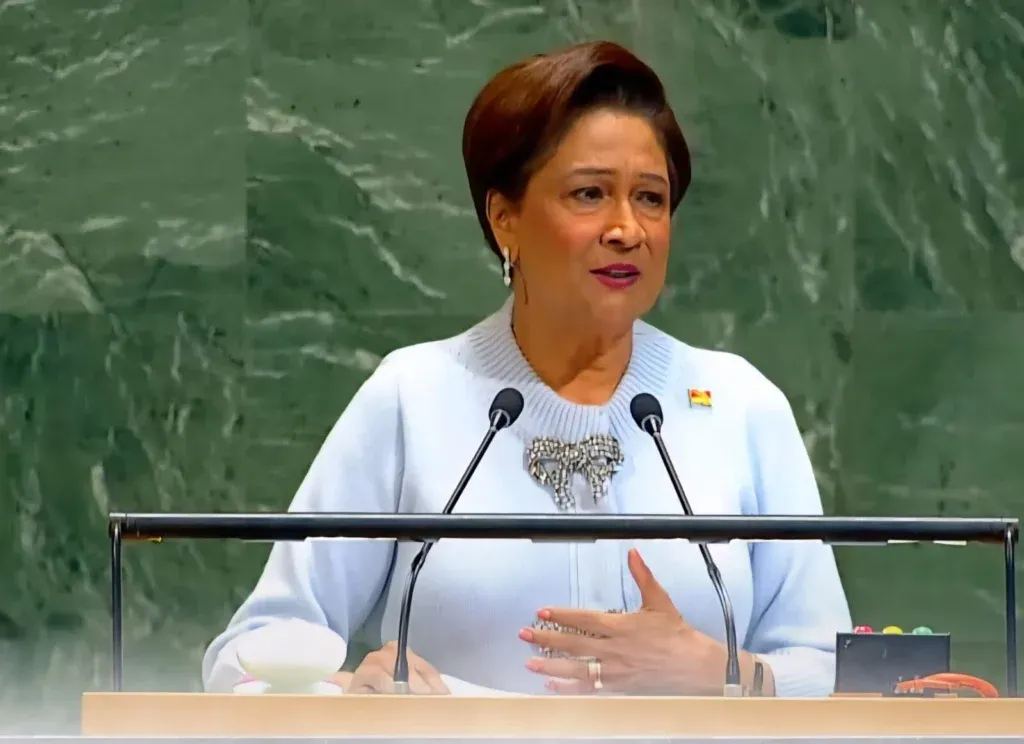
- Prime Minister Dickon Mitchell, addressing Parliament on Tuesday, said Washington had requested a response within a specific timeframe, but his administration could not yet provide one.
- “For the simple reason that…from a technical point of view, we are not in a position to satisfy ourselves as to safety and other technical requirements, as to whether or not such equipment [fits] properly optically at the airport,” he explained.
- Mitchell emphasized that Grenada has no military and that cooperation with the United States must remain within the framework of law enforcement, domestic legislation, and international law.
The Grenada government says it will not enter into any agreement that could violate regional, domestic, or international law, as discussions continue over a U.S. request to install radar equipment at the Maurice Bishop International Airport (MBIA).
Prime Minister Dickon Mitchell, addressing Parliament on Tuesday, said Washington had requested a response within a specific timeframe, but his administration could not yet provide one. “For the simple reason that…from a technical point of view, we are not in a position to satisfy ourselves as to safety and other technical requirements, as to whether or not such equipment properly optically at the airport,” he explained.
Mitchell emphasized that Grenada has no military and that cooperation with the United States must remain within the framework of law enforcement, domestic legislation, and international law.
The prime minister also noted that public debate has intensified around the U.S. request. He reminded lawmakers that Grenada already maintains ongoing security cooperation with the U.S. and regional partners in combating drug trafficking, human trafficking, and related crimes.
“Sometimes the cooperation does extend to the U.S. Southern Command, which is the military arm of the U.S.,” Mitchell said. “So cooperation with the U.S. is ongoing and permanent in our case.”
He added that while some aspects of the radar proposal are part of broader security collaboration, the government could not publicly discuss operational details “because we don’t want criminals to know what some of the arrangements for addressing crime are.”
Mitchell described the ongoing public debate as proof that the government recognized from the outset that the proposal was sensitive. He pointed out that MBIA, as a civilian airport, is “not equipped to treat with military-type operations,” and that radar installation could disrupt normal activity.
Technical assessments are still being conducted, Mitchell said, noting that U.S. officials have already evaluated potential sites. “They have done so, and after having done so, they would have indicated that there were two sites that were interested in… They have come back and are interested, perhaps in one site.”
Last month, Grenadians held a peaceful protest opposing the U.S. plan. Former foreign affairs minister Peter David told the “Peace March,” organized by the Grenada Coalition Zone of Peace and Concerned Citizens, that the issue transcends politics.
“We are here demanding that our region be maintained as a zone of peace,” David said. “We are not here to fight down anybody… we say Grenada first, the Caribbean first. This is not a partisan issue, this is an issue of sovereignty and integrity for the people of Grenada.”
The request comes amid broader U.S. efforts to bolster its presence in the Caribbean and off the coast of South America as part of its anti-drug trafficking operations. Washington has confirmed several maritime bombings in recent years as part of that campaign.