In a discussion regarding Haiti’s deepening crisis, a United States diplomat revealed on Wednesday that the establishment of a transitional council tasked with selecting Haiti’s future leaders is on the horizon.
Brian A. Nichols, US assistant secretary for Western Hemisphere affairs, disclosed this development during a charged event hosted by the Council on Foreign Relations in New York.
Path to formation
The anticipated nine-member council could see formal establishment within Haiti as soon as this week, according to Nichols.

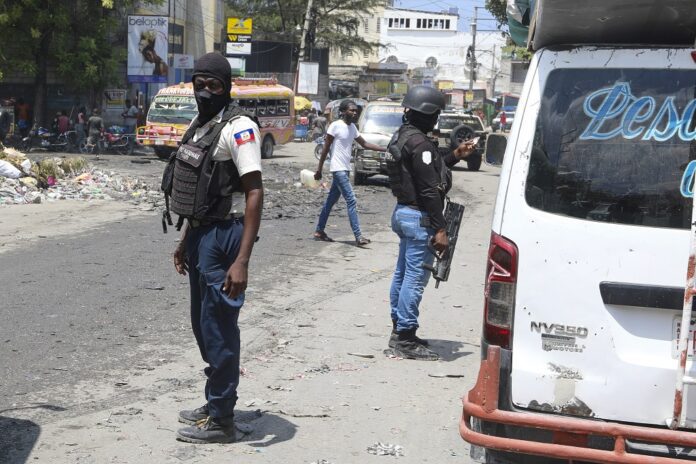
This move comes as Haiti grapples with a profound power vacuum, leaving the nation vulnerable to incessant gang violence.
The capital city of Port-au-Prince and its surrounding areas have been particularly hard-hit, prompting over 53,000 individuals to flee in recent weeks.
Rampant violence and humanitarian crisis
The closure of Haiti’s primary seaport and airport exacerbates the dire situation, impeding crucial aid delivery.
Nichols underscored the severity of the crisis, asserting that Haiti faces perhaps the most acute humanitarian crisis globally.
Onslaught of violence
Gangs initiated a series of assaults on key government installations throughout Port-au-Prince starting on February 29.
These attacks included gunfire at the main international airport, still shuttered, and raids on police stations and major prisons, resulting in the release of over 4,000 inmates.

UN’s grim assessment
The UN Human Rights Office has labeled the situation in Haiti as “cataclysmic,” citing over 1,550 fatalities and more than 800 injuries as of late March.
Transition Council’s role
The forthcoming transitional council, composed of seven members with voting authority to appoint Haiti’s next prime minister and Cabinet, is not anticipated to offer immediate solutions to the nation’s entrenched issues.
Nichols emphasized the multifaceted nature of Haiti’s challenges, stating that a singular approach will not suffice.
Contentious exchange
During the forum, Nichols faced scrutiny from Monique Clesca, a Haitian writer and member of the Montana Group, a coalition awarded a seat on the transitional council.
Clesca rebuked the US for its support of Prime Minister Ariel Henry, whom she accused of incompetence and blamed for the country’s deteriorating conditions.
Debate on US support
Henry assumed interim leadership with international backing following the assassination of President Jovenel Moïse in July 2021.
However, he has encountered opposition from Haiti’s most influential gangs, citing his lack of democratic mandate.
Henry, in turn, has pledged to step down upon the council’s formation.
Reflection and critique
Clesca challenged the US’ backing of Henry, urging a reevaluation of past policies. She questioned the wisdom of such support in light of subsequent events, urging introspection and acknowledgment of any shortcomings.
Henry’s absence and Haiti’s predicament
Henry’s absence from Haiti, following his visit to Kenya in February to advocate for a UN-backed police deployment, coincided with intensified violence, resulting in the closure of major entry points into the country.