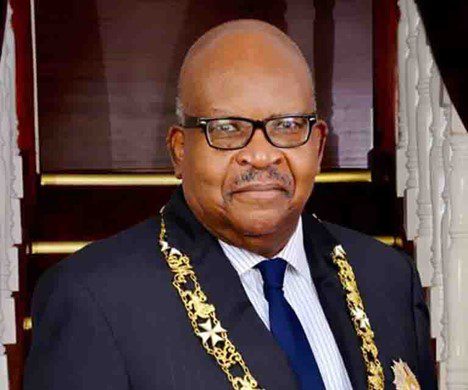
Governor General of St Kitts and Nevis, Sir Tapley Seaton, has denied a request by six legislators for the removal of Prime Minister Timothy Harris as the split within the ruling coalition Team Unity government takes another turn.

Deputy Prime Minister Shawn Richards has indicated that a joint statement would be issued later on Thursday by the six elected representatives of the National Assembly.
In his letter to the legislators, the governor general said he had “reviewed your communication requesting the governor general to remove the prime minister and to appoint another minister in his stead.

“I wish to advise that under our Constitution no such power resides in the governor general, and I am therefore unable to accede to your request,” he said in the brief letter.
Last month in an earlier response to the legislators, the head of state had indicated that he was awaiting “formal advice” on the situation and would “revert to you at the earliest.”
The coalition government comprises Harris’s People’s Labour Party (PLP), the People’s Action Movement, headed by Harris and the Concerned Citizens Movement (CCM) which is headed by Nevis premier, Mark Brantley.
The PLP controls two of the nine seats in the coalition government with the two other seats in the National Assembly belonging to the opposition St Kitts-Nevis Labour Party (SKNLP) which has already called for fresh general elections to end the crisis in the government.
Last month, the disgruntled members of the coalition announced they had filed a motion of no confidence in Prime Minister Harris.
Harris has himself called on the population to be aware of “certain misgivings in the public domain with respect to the issues raised by the Team Unity partners.

Brantley has maintained that Prime Minister Harris does not have the support of the majority of the members in Cabinet, adding that based on legal advice, the governor general “does, in fact, have the authority to act and therefore we have invited him to do so.”
Richards had also indicated that the legislators would follow the “rule of law and the Constitution” adding “we will leave our fate in the hands of the people.
When a motion of no confidence is filed, the speaker of the National Assembly is required to schedule a sitting of parliament within 21 days for the motion to be debated.
If the motion is passed, the prime minister may resign in three days or advise the governor general to dissolve the parliament. If parliament is dissolved, the prime minister has the power to call an election in 90 days.
CMC/