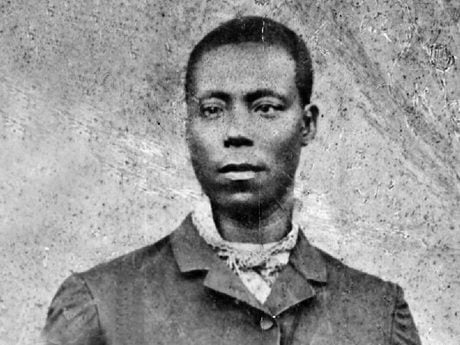
Jamaica’s Minister of Culture Olivia Grange has announced that October 11th of each year will now be observed as Paul Bogle Day on the island.
The purpose of Paul Bogle Day will be to honor and commemorate the life, legacy and achievements of the Jamaican national hero, according to Grange who made the announcement on Tuesday in the House of Representatives.
“In response to my request, Sir Patrick Allen, Governor General of Jamaica, has issued a proclamation that as of this year, October 11, the day of the Morant Bay war will be observed annually as Paul Bogle Day,” Grange announced.

Grange said that Bogle was a leader within his parish of St. Thomas and often took it upon himself to seek peaceful resolutions of injustices against his fellow Jamaicans.
“On one occasion, Bogle endured the arduous 45-mile journey from Stony Gut [in St Thomas] to Spanish Town to seek audience with the then Governor, who refused to see him,” Grange said.
“Undaunted by this rebuke, Bogle decided to engage in mass protestation as he sought to confront the conditions of the people of St Thomas, and Jamaica in general. It was one such march on October 11 from Stony Gut to Morant Bay that led to incursions and skirmishes with the State and which culminated in the courthouse being burned to the ground in what became the Morant Bay War,” she continued.
She said that she is proud that the dreams of Paul Bogle for better working and livable conditions of the people of St. Thomas are coming to pass.
“The story is told that the Jamaica House of Assembly passed a resolution in 1865 to punish the people of St. Thomas for their action, determined that the parish would see very little development,” she said.
“We as a government have broken that curse. Very soon, the people of St Thomas will have greater access to the commercial canter of our country by way of a new highway. This will no doubt enhance the quality of life for the people of St. Thomas going forward.”

Historical significance
On October 11, 1865, Paul Bogle led hundreds of Black men and women armed with sticks and machetes, on a protest march to the Morant Bay Court House.
Among the issues that the group was protesting included poverty, lack of voting rights and high poll taxes. A few days earlier, a fight had erupted at the court house between policemen and civilians, resulting in heightened tension between residents and the authorities. This marked the start of what is now known as the Morant Bay Rebellion.
Read more on Paul Bogle:
- This Day in History: Paul Bogle and George W. Gordon Declared National Heroes
- This day in history: the Morant Bay rebellion began
When the group arrived at the court house in Morant Bay on Oct. 11, they were met by local officials and a small and inexperienced volunteer militia. A war erupted between the two groups in which 25 people died and buildings were burnt. Over the next two days, even more freed Blacks joined the rebellion that spread throughout the entire parish.
In the end, British soldiers, acting on instruction of Governor John Eyre, killed 439 black Jamaicans and arrested 354 others including Paul Bogle.
Mixed race businessman and politician George William Gordon (another national hero) who was openly critical of the governor was initially assumed to be the mastermind behind the rebellion. He was captured and hanged on October 23, 1865.
On October 25, Bogle was hanged alongside 14 others, including his brother Moses.