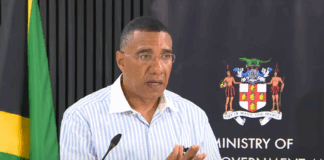
Jamaica’s Minister of State in the Ministry of National Security, Hon. Juliet Cuthbert-Flynn, emphasized the importance of a multisectoral approach to combat human trafficking effectively.
According to the Minister, no single individual, agency, or organization can tackle this challenge alone.
The crime’s complexity, whether within or across borders, necessitates cooperation among countries of origin, transit, and destination to efficiently address, assist, and prosecute involved parties.

Launching a regional forum to demystify human trafficking
On May 20, at The Jamaica Pegasus Hotel in New Kingston, the 2024 Freedom from Slavery Caribbean Regional Forum was inaugurated.
Under the theme ‘Demystifying Human Trafficking in the Caribbean Context: The Intersection of Culture and Human Trafficking’, the event was co-organized by Free the Slaves and Jamaica’s Office of the National Rapporteur on Trafficking in Persons.
This three-day conference aims to provide a platform for informed and collaborative strategies to confront human trafficking directly.
Government initiatives and legislative responses
Mrs. Cuthbert-Flynn outlined ongoing government initiatives aimed at combating human trafficking. These include reviewing and updating the Trafficking in Persons Act to keep pace with the evolving tactics of traffickers.
The Government has also shown commitment through the establishment of the National Taskforce Against Trafficking in Persons and the appointment of a National Rapporteur on Trafficking in Persons.
This role involves conducting independent investigations into alleged instances of trafficking.

Educational and collaborative efforts to combat trafficking
The Minister highlighted the importance of education and awareness-raising to challenge and change cultural norms that may perpetuate trafficking.
Government collaborations with civil society and international partners have led to the development of training programs for law enforcement, service providers, and the public to improve recognition and response to human trafficking.
Furthermore, strategic collaborations with regional and international stakeholders aim to strengthen efforts against cross-border trafficking networks.
Cultural and socioeconomic strategies to address root causes
Acknowledging the underlying causes of trafficking, such as poverty, gender inequality, and social marginalization, Mrs. Cuthbert-Flynn reaffirmed Jamaica’s commitment to promoting socioeconomic empowerment.
This commitment is part of a broader strategy to foster a cultural shift that rejects the commodification of human lives and supports the healing and empowerment of trafficking survivors.
Strengthening community engagement
Bukeni Waruzi, Executive Director of Free the Slaves, advocated for an increased focus on community-level efforts, including in families and schools, to combat human trafficking and modern-day slavery.
This grassroots approach is essential for the development of effective and lasting solutions to eradicate trafficking.