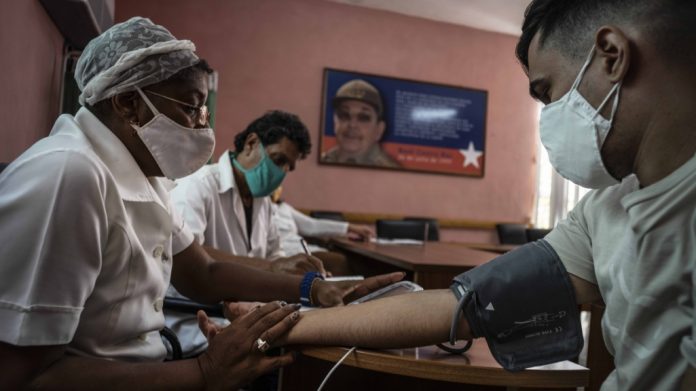
Cuba’s public health ministry says the 61st National Oral Polio Vaccination Campaign will begin on Monday.

The ministry reported on its website that during the two stages of the campaign, all children from one month old to two years, 11 months and 29 days of age will be vaccinated.
Likewise, all nine-year-old children will be reactivated with a dose of oral polio vaccine.

The first stage of the campaign will take place between March 14 and March 19, 2022, with a catch-up week from March 21 to 26.
The second one between May 16 and May 21, 2022, with a recovery week from May 23 to 28.
Poliomyelitis is an infectious-contagious disease that affects the central nervous system, mainly in children, and can cause muscular atrophy, paralysis, deformity and in some cases death.
Polio was first detected in Cuba in the late 19th century among residents of the US community on the Isla de Pinos (Isle of Pines, now Isle of Youth), apparently introduced through migration from the USA. The first outbreak was reported in 1906 on the Isle, with the first epidemic reported in the former province of Las Villas in 1909. The epidemics subsequently intensified, by 1934 becoming periodic every four to five years, and accompanied by high morbidity, mortality, and crippling sequelae, primarily among children.
Cuba eliminated polio in 1962 and was among the first countries to do so. Since then, only 20 cases of vaccine-derived paralytic poliomyelitis have been reported. Because Cuba used oral poliovirus vaccine exclusively in two mass campaigns each year, Sabin viruses were detected only within approximately 6-8 weeks after each annual campaign.
This makes Cuba an extremely attractive site to study the epidemiology of poliomyelitis in a tropical country without risk of secondary transmission of Sabin viruses for a large part of each year, an advantage over countries that used oral poliovirus vaccine continuously throughout the year in routine immunization programs.

Since 1962, six vaccine-preventable diseases and some serious forms of other diseases have been eradicated in the country. Conditions such as tetanus, haemophilus influenzae type b meningitis, typhoid fever, and meningococcal disease register rates of less than 0.1 per 100,000 inhabitants in Cuba.
CMC/