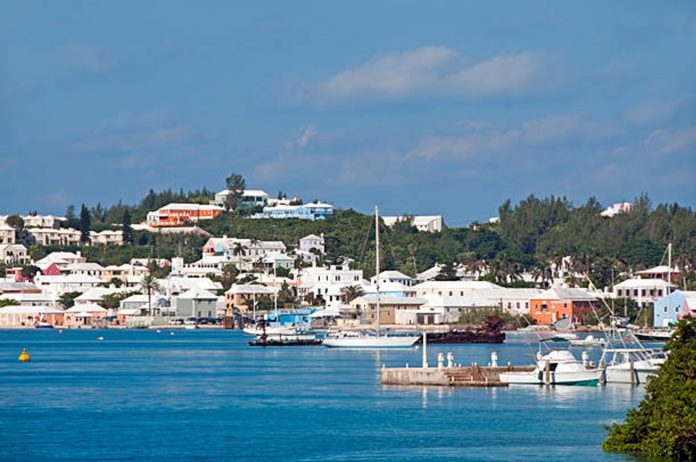
The Bermuda government is expected to forge ahead with plans to turn the Corporations of Hamilton and St George’s into unelected quangos – semi-public administrative bodies outside the civil service but receiving financial support from the government – after the Court of Appeal rejected an appeal by City Hall.

The Corporation of Hamilton, which has served the city for more than 200 years, launched legal action to block the move last year and claimed that the Municipalities Amendment Act 2018 was unconstitutional.
The local authority lost the case but filed an appeal last November.

The appeal has now been rejected in a 67-page ruling.
It is the second major victory for the Progressive Labour Party government this month.
Last week, the Privy Council in London – Bermuda’s highest court of appeal – ruled in favor of halting same-sex marriages.
Mayor of Hamilton Charles Gosling said he was disappointed by the Appeal Court’s decision on the corporations but did not rule out further legal action.
“We are naturally disappointed by the judges’ ruling in this matter and are currently in the process of reviewing the lengthy judgment with our legal team.”
The government would appoint the mayors and half of the councilors and the other councilors would be appointed by the relevant minister on the recommendation of a selection committee under the terms of the legislation.

City Hall argued that the bill will give the government “overwhelming” control of the municipalities and their properties, which will amount to an unconstitutional deprivation of property.
Sir Christopher Clarke, president of the Court of Appeal, wrote: “There has been no breach of the corporation’s common law right to the protection of the law.
“Neither the amendment acts, nor the proposed reform act, if enacted, contravene Section 13 of the constitution.
“I would, accordingly, dismiss the appeal.”
Appeal judges Dame Elizabeth Gloster and Geoffrey Bell agreed.
Sir Jeffrey Jowell QC, counsel for the city, told the Court of Appeal that the legislation amounted to an “abolition” of the Corporation of Hamilton, and it should not have been watered down to a question of political opinion.
He added: “The abolition of elections – people who have been residents in the City of Hamilton for generations now being told they must accept an essentially appointed body that is going to express their so-called voice, where there will be no direct voice whatsoever – that is the reason, I am trying to locate this matter in constitutional principle and human rights, specifically the right of expression.”
But the government, represented by Delroy Duncan QC, argued that the municipalities would retain control of their properties as quangos and the legislation would improve cooperation between the two bodies and the government.
Elections for councilors to represent both corporations were scheduled to be held in May.
But last month the government said it would postpone the ballot for a year because of the appeal.
The Corporation of Hamilton has served the city since it was founded in 1795. Hamilton, the current capital, was named after Governor Henry Hamilton, who left the island in 1794 to become Governor of Dominica until he died in 1796.
CMC/