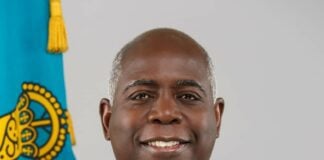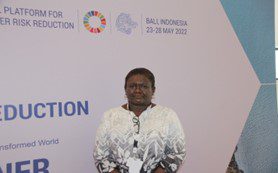
The head of St. Vincent and the Grenadines’ disaster management agency, Michelle Forbes, says it is important for Caribbean countries to use their voices at international fora, such as the Global Platform for Disaster Risk Reduction, to outline their concerns.
“As a small island developing state and our increasing vulnerabilities and complexities, we are seeing now with the various hazards that affect the Caribbean, it’s really important for countries like St. Vincent Grenadines, to really have a voice and be able to interact with the different agencies and with the UN system,” Forbes told the Caribbean Media Corporation (CMC).
Forbes said it is disappointing that not many countries from the English-speaking Caribbean attended the event, which ended on Friday and brought together an estimated 5,000 representatives of governments, the private sector, and civil societies from 194 countries.

She said the meeting, which takes place every three years, was an opportunity for Caribbean countries to express their views and take account of the challenge as well as the gains made towards addressing the seven targets of the Sendai Framework.
The Sendai Framework for Disaster Risk Reduction 2015-2030 was the first major agreement of the post-2015 development agenda and provides member states with concrete actions to protect development gains from the risk of disaster.
“And I think we really need to have a voice here and have persons begin here to really share their experiences and actually speak about what we are doing in the region,” Forbes told CMC on the final day of the conference.
The conference heard that only 95 countries reported having multi-hazard early warning systems that give governments, agencies, and the general public notice of an impending disaster, with particularly low coverage in Africa, Least Developed Countries (LDC) and Small Island Developing States (SIDS).
Early warning systems were cited as a critical defense against disasters such as floods, droughts, and volcanic eruptions in the recent Global Assessment Report, which predicted 560 – or 1.5 disasters a day – by 2030 based on the current trajectory.
It comes after António Guterres, UN Secretary-General, called for the warning systems to cover every person on the planet within five years.

CMC/