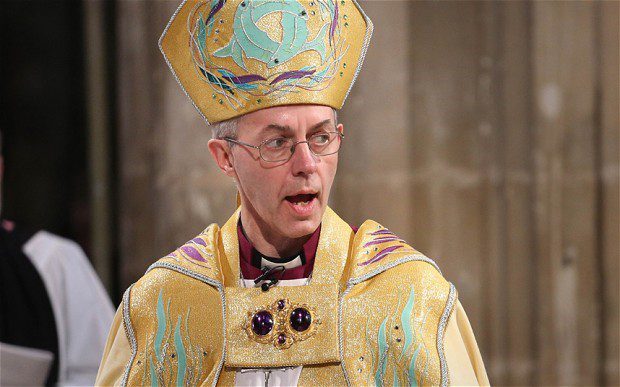
The Archbishop of Canterbury apologized to the people of Jamaica for the Church of England’s participation in slavery. The Right Honorable Justin Welby, was the guest preacher at the celebration of the 200th anniversary of the Anglican Diocese of Jamaica and the Cayman Islands held on Sunday.
The celebratory church service was held at the National Arena in St Andrew and was attended by hundreds of people, including dignitaries and high-ranking members of the church.
It was Welby’s opinion, that “the church sinned and consumed the sheep”.

“I cannot speak for the Government of the United Kingdom but I can speak from my own heart and represent what we say now in England. We are deeply, deeply, deeply sorry. We sinned against your ancestors. I would give anything that that can be reversed, but it cannot,” Welby said, pointing out that the church began its transformation from loving power to begin loving people, in the 19th century.
Webly said though the apology is long overdue it is better late than never “We are now responsible to God to do right, and to repent and say sorry. That must involve reversing direction and going in a different way. Our Saviour and His ever-present love led the church into seeking to do right. Too late, but better late than never.”
He said he knows that parts of the Church of England, and even one of the archbishops in the 18th century, owned slaves.

“The shepherd, as Ezekiel said, consumed the flock. It is no wonder the Church of England has suffered judgement, for what worse thing could be done? Even for those in the church who did not actively participate in chattel enslavement, the silence of the church was collusion, an agreement with slavery,” he said, adding that there were bishops who truly profited from slavery.
An archbishop of Canterbury in the 18th century approved payments for the purchase of enslaved people for two sugar plantations in Barbados, documents seen by the Observer have revealed.
Thomas Secker agreed to reimburse a payment for £1,093 for the purchase of enslaved people on the Codrington Plantations, as well as hiring enslaved people from a third party. It was stated the measures were “calculated for the future lasting advantages of the estates”.

The papers are among a cache of documents found in the archives of Lambeth Palace Library which detail the direct links between the Church of England and chattel slavery on plantations owned by its missionary arm, The Society for the Propagation of the Gospel in Foreign Parts (SPG).