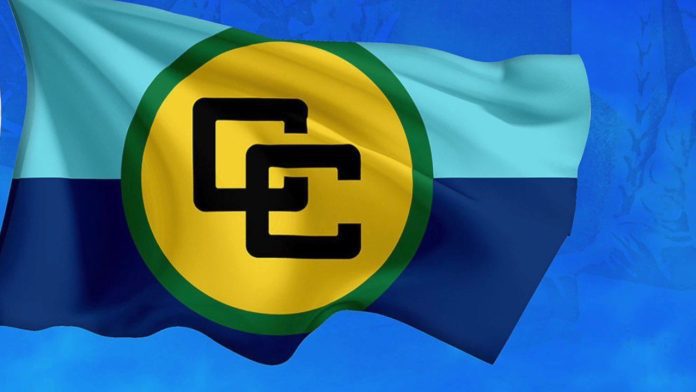
The 48th CARICOM Heads of Government Conference begins today, Wednesday, February 19, in Bridgetown, Barbados, hosted and chaired by Prime Minister Mia Mottley. As usual, the conference’s agenda is packed, with a significant focus on geopolitical issues that have emerged since Donald Trump assumed office as the 47th president of the United States on January 20.
CARICOM/US Relations
The relationship between CARICOM and the United States is governed by several legal frameworks, including the Caribbean Basin Initiative, which encompasses the Caribbean Basin Economic Recovery Act and the Caribbean Basin Trade Partnership Act. Other key agreements include the US/Caribbean Trade and Investment Agreement and the 2016 US/Caribbean Strategic Engagement Act.

The United States remains the principal trade partner for CARICOM nations. In 2023, CARICOM imported approximately $17.24 billion in goods from the US and exported $10.09 billion, resulting in a trade surplus of $7.06 billion in favor of the US. This trend continued in 2024, with the US maintaining a significant surplus with Jamaica and The Bahamas, while having deficits with Guyana and Trinidad and Tobago. Tourism, primarily from US visitors, is the leading source of services trade between the two regions, with an estimated 3.5 million US visitors to CARICOM nations in 2023. Additionally, US companies have a strong presence in CARICOM, particularly in the energy and services sectors.
Apart from trade, CARICOM collaborates with the US on issues such as security (including the fight against illegal firearms), immigration, health, energy, and disaster management. Furthermore, over three million non-Hispanic Caribbean nationals are estimated to live in the US, making it the largest source of remittances to CARICOM countries.
Recent US Actions Impacting CARICOM
Several recent US actions have raised concerns for CARICOM nations:
- Trade: President Trump has proposed imposing or increasing tariffs on countries exporting goods to the US, including those in CARICOM. His administration is reviewing all bilateral trade agreements to assess tariff reciprocity, which could lead to higher tariffs on goods exported to the US. This review, set to conclude by April 1, may render existing trade arrangements irrelevant under Trump’s protectionist stance, disregarding international trade laws like those under the World Trade Organization (WTO).
- Overseas Development Assistance: The US Agency for International Development (USAID) is being dismantled, and US foreign aid has been frozen for 90 days, severely impacting development assistance to CARICOM nations.
- Health: The US is withdrawing from the World Health Organization (WHO), a move that could have far-reaching consequences, particularly for global health initiatives and Caribbean countries that benefit from US contributions.
- Climate Change and Climate Finance: The US has pulled out of the Paris Climate Accords and is increasing its mining of fossil fuels while reversing green policies. This shift threatens global climate efforts, including climate finance that CARICOM countries rely on.
- United Nations: The Trump administration is reassessing the US’s membership in and funding of the United Nations. Issues like the Ukraine conflict, Israel/Palestine negotiations, and Haiti’s peacekeeping operations are affected by this policy shift. There are also proposals that challenge the UN’s principles, such as attempts to acquire Greenland or annex Canada.
- Bilateral Relations: The US’s growing relations with China and Russia, particularly in the Caribbean, could alter the geopolitical balance in the region. Additionally, US policy on Cuba is likely to become more rigid under Secretary of State Marco Rubio.
- International Meetings: The US Secretary of State is boycotting the G20 Foreign Ministers Meeting in South Africa due to alleged discrimination against white South Africans, and President Trump may also skip the G20 Summit in November. Tensions with South Africa could influence the US’s engagement in other international forums, including the G7 Summit and the UN General Assembly.
CARICOM and the Rule of International Law
CARICOM, as a region of smaller states, has consistently supported international law and order. Its member states, upon independence, joined the UN to safeguard their interests and have a voice in global affairs. The US Secretary General is a guest at the current CARICOM Heads of Government meeting.

The Trump administration’s actions, including undermining the post-World War II global multilateral system, challenge the principles upon which CARICOM has based its foreign policy. CARICOM nations may soon face difficult decisions that could put them at odds with US policies.
CARICOM Unity
Two recent articles have examined CARICOM’s approach to foreign policy coordination. While CARICOM is not mandated to have a unified foreign policy under the Revised Treaty of Chaguaramas, it is hoped that the region can present a united front when responding to US proposals, particularly in multilateral forums. This approach is critical as CARICOM strives to protect its collective interests in a rapidly changing geopolitical landscape.
The Heads of Government will need to strategize effectively to ensure CARICOM’s unity in addressing the challenges posed by US actions, both regionally and globally.