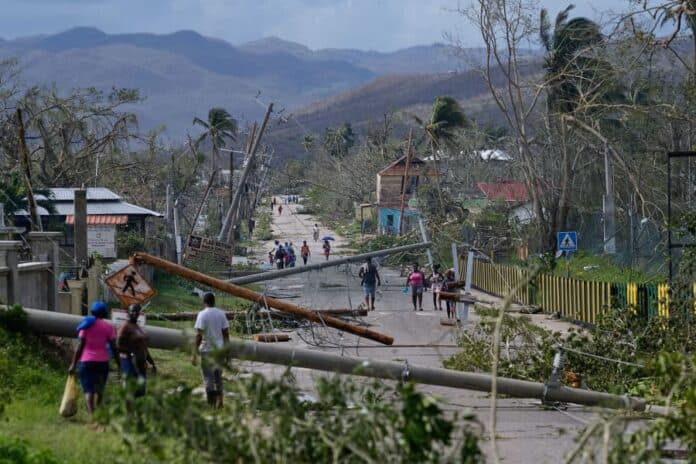
British Virgin Islands governor welcomes UK report on crime and corruption
Key Points(5)
- The report paints a grim picture, warning that the territory is grappling with local serious crime, widespread corruption, and transnational organised crime, including financial crimes.
- It raises serious doubts about the BVI’s capacity to manage its critical law enforcement bodies without external assistance.
- In a statement following the report’s release, Governor Pruce welcomed its recommendations.
- “It recommends improvements designed to optimise and support law enforcement agencies in performing their duties,” Pruce said.
- This suggestion has sparked backlash among elected officials, who see it as a direct challenge to the territory’s self-governance.
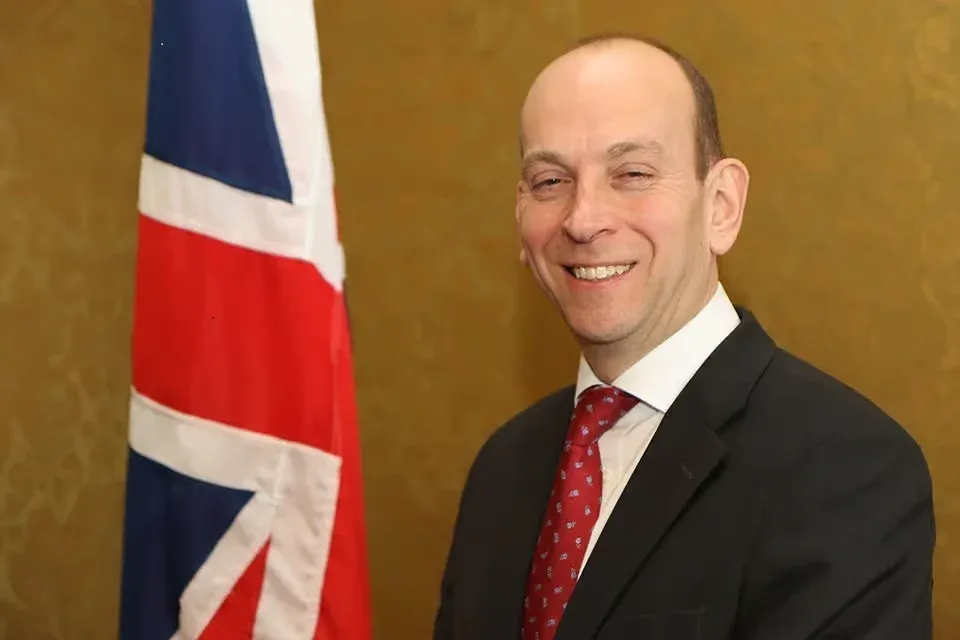
Governor Daniel Pruce has embraced the findings of a new UK-commissioned report that highlights systemic issues of corruption and serious crime in the British Virgin Islands, calling the document “an ambitious and far-reaching roadmap for change.”
The assessment, conducted by His Majesty’s Inspectorate of Constabulary and Fire & Rescue Services, is the second of its kind and reviews the performance of nine key institutions within the British Virgin Islands' law enforcement and justice system. These include the Royal Virgin Islands Police Force, Customs Department, Financial Investigation Agency, Department of Immigration, HM Virgin Islands Prison Service, Office of the Director of Public Prosecutions, Magistrate’s Court, Eastern Caribbean Supreme Court, and the Attorney General’s Chambers.
The report paints a grim picture, warning that the territory is grappling with local serious crime, widespread corruption, and transnational organised crime, including financial crimes. It raises serious doubts about the BVI’s capacity to manage its critical law enforcement bodies without external assistance.
In a statement following the report’s release, Governor Pruce welcomed its recommendations.
“It recommends improvements designed to optimise and support law enforcement agencies in performing their duties,” Pruce said. “It’s an ambitious and far-reaching roadmap for change, to make the territory safer over the next decade and beyond.”
Controversial power shift proposal
One of the most hotly contested elements of the report is a proposal to transfer control of the Customs Department, Financial Investigation Agency, and Immigration Department from the elected government to the Governor. This suggestion has sparked backlash among elected officials, who see it as a direct challenge to the territory’s self-governance.
On April 8, the report was debated in the House of Assembly, where Premier Dr. Natalio Wheatley denounced the recommendation as a regressive and colonial move.
“The people of the Virgin Islands must rise up and say no!” Dr. Wheatley declared. “We will not give more responsibility to the Governor! We will not take areas that have been devolved to the elected government back to the Governor. That is taking us backwards in the wrong direction.”
Several lawmakers echoed the Premier’s concerns, accusing the UK of attempting to roll back democratic progress in the territory.
Despite the tensions, Governor Pruce emphasized the need for collaborative reform, stating that he remains committed to working with Dr. Wheatley, the National Security Council, and other justice sector stakeholders to address the issues raised.
As part of the broader effort to overhaul law enforcement, Governor Pruce also announced that the search for a new Police Commissioner will be relaunched following the recent departure of Commissioner Mark Collins.
“We will be looking for a leader who can deliver transformational change in a complex organisation,” the Governor said, adding that the recruitment process will be shaped by the review’s findings.
It remains unclear how the UK will proceed if the BVI government resists implementing some of the report’s more controversial recommendations. For now, the report lays out a roadmap—but one with many political hurdles ahead.


.JPG&w=3840&q=75)