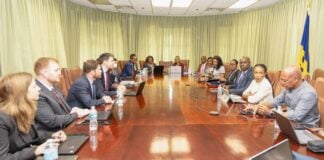
The Bahamas and China have signed a framework agreement for the construction of a new specialty hospital in western New Providence, a project estimated at nearly US$300 million and expected to significantly strengthen the country’s healthcare system.
Prime Minister Philip Davis, speaking at Friday’s signing ceremony, said the initiative marks more than just a new development — it reflects the “continued friendship and mutual respect” between Nassau and Beijing.
“This is a significant occasion, not simply because of what it sets in motion, but because of what it represents,” Davis said, emphasizing that the relationship between the two nations is “rooted in cooperation, development, and shared values.”

The new facility will feature a neonatal intensive care unit, services for same-day surgeries and minor procedures, diagnostic and interventional imaging, molecular medicine, and teaching hospital services. It will also house a blood bank, laboratory, national reference morgue, and pathology services.
Construction is expected to take between 30 and 36 months, funded through a concessional 20-year loan from the China Export-Import Bank.
Over the years, Davis noted, the Bahamas’ partnership with China has included investments in infrastructure, education, cultural exchange, and diplomatic engagement — all aimed at improving lives and strengthening ties.
“Each collaboration has been grounded in a commitment to strengthen the ties between our peoples and improve the conditions in which our citizens live and thrive,” Davis said.
He added that despite being a small island nation, the Bahamas has always believed that “the size of a country does not determine the value of its voice or the worth of its aspirations.” China, he said, has been a consistent partner that “has listened, understood, and acted in good faith.”
Addressing the country’s current health challenges, Davis said Bahamians have long endured long wait times, overburdened clinics, outdated facilities, and limited access to care, especially on the Family Islands.

“Too many people have felt like the system was out of reach or working against them. And for our doctors, nurses, and healthcare workers, the conditions have often made an already difficult job even more challenging. We cannot accept that as the standard. We will not accept that,” he said.
“With our Chinese partners, we are creating new opportunities to deliver on that promise,” Davis added. “This cooperation will help us build infrastructure that is fit for purpose, and designed with the needs of our population in mind.”