US suspends truck driver visas after fatal Florida crash involving undocumented driver
Key Points(5)
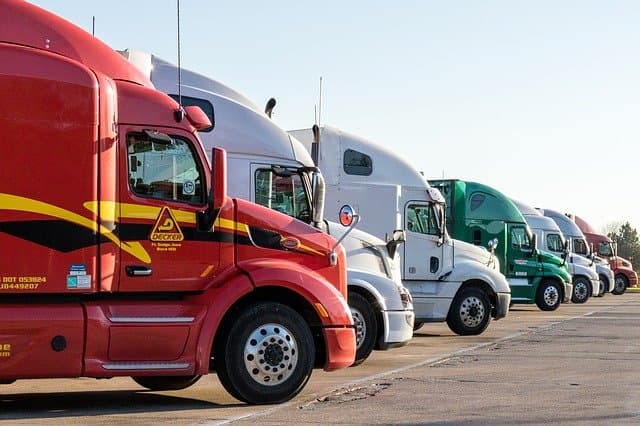
- The United States has stopped issuing visas for commercial truck drivers following a deadly crash in South Florida earlier this month.
- Secretary of State Marco Rubio announced the move Thursday, saying the freeze takes effect immediately.
- “Effective immediately we are pausing all issuance of worker visas for commercial truck drivers,” <a href="https://x.com/SecRubio/status/1958644528253948015">Rubio wrote on X</a>.
- “The increasing number of foreign drivers operating large tractor-trailer trucks on U.S.
- Investigators say Singh attempted an illegal U-turn, causing a Chrysler Town & Country minivan to slam into his semi-truck.
The United States has stopped issuing visas for commercial truck drivers following a deadly crash in South Florida earlier this month.
Secretary of State Marco Rubio announced the move Thursday, saying the freeze takes effect immediately.
“Effective immediately we are pausing all issuance of worker visas for commercial truck drivers,” Rubio wrote on X. “The increasing number of foreign drivers operating large tractor-trailer trucks on U.S. roads is endangering American lives and undercutting the livelihoods of American truckers.”
The announcement comes days after Harjinder Singh, 28, was charged with three counts of vehicular homicide in connection with an August 12 crash on Interstate 95 in St. Lucie County. Investigators say Singh attempted an illegal U-turn, causing a Chrysler Town & Country minivan to slam into his semi-truck. The impact killed three people, including a 30-year-old driver from Florida City and two passengers from Pompano Beach and Miami. Singh was not injured.
Singh, a native of India, had been living in the U.S. illegally since crossing the border from Mexico in 2018, authorities said. He obtained a commercial driver’s license in California through the federal SAVE verification system, which allows states to confirm the immigration status of applicants. He was arrested on August 16 by U.S. Marshals in Stockton, California, after allegedly fleeing the crash site.
“The actions taken by the defendant while operating a commercial tractor-trailer are both shocking and criminal,” Florida Highway Safety and Motor Vehicles Executive Director Dave Kerner said. “Three people lost their lives as a result of his recklessness, and countless friends and family members will experience the pain of their loss forever.”
The Trump administration has pointed the blame at California Gov. Gavin Newsom, accusing the state of lax licensing practices that allowed Singh to legally operate a commercial vehicle.
Foreign-born truck drivers have become an increasing presence in the U.S. industry, doubling in number between 2000 and 2021 to more than 720,000, according to federal data. Today, they make up 18 percent of the workforce, with most coming from Latin America, as well as growing numbers from India, Ukraine, and other countries.
Large Caribbean diaspora communities in places like New York, Florida, New Jersey, Georgia, and Texas also have members working in trucking, especially Jamaicans, Haitians, Trinidadians, and Guyanese. These communities often enter trucking because it offers stable employment, relatively quick certification through CDL programs, and opportunities for entrepreneurship (owning/operating rigs).