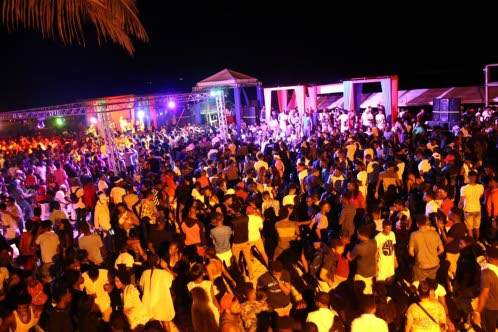
In the Caribbean, entertainment is not a side dish; it is the main course. Music, fêtes, street dances, carnivals, and cultural gatherings are stitched into our identity and fuel a powerful economic engine. From food vendors and sound engineers to dancers, promoters, security personnel, and transport operators, thousands earn their livelihoods from the entertainment industry. Yet a difficult and often avoided question remains: at what point does entertainment stop being culture and commerce, and start becoming a noise nuisance that robs others of their basic right to peace in their own homes?
This question has been thrust into the spotlight by the Prime Minister of Trinidad and Tobago’s recent decision to restrict entertainment events, particularly fêtes, inside the Brian Lara Cricket Academy and other sporting venues. The move has been met with mixed reactions. Some view it as an attack on culture and economic opportunity. Others see it as long-overdue recognition that not every space is suitable for high-decibel entertainment, especially when residential communities bear the brunt of the fallout.
Jamaica’s experience mirrors this tension, though our response has been far less decisive. While there have been attempts to designate special entertainment zones, these efforts have been weak, inconsistent, and poorly enforced. As a result, loud events continue to be hosted in spaces never designed for that purpose, often within close proximity to people’s homes.

Consider Hope Pastures, a quiet residential community situated uncomfortably close to Hope Gardens and Hope Zoo. These venues are regularly transformed into sites for loud parties and large-scale entertainment events that stretch late into the night. Residents, including families, elderly persons, and shift workers, are left powerless as bass lines rattle windows and sleep becomes collateral damage. Similar frustrations are voiced by those living near the National Stadium and Mas Camp, where entertainment regularly spills beyond reasonable limits.
This is not a new problem. Jamaicans still remember the now-infamous SANDZ party fiasco years ago, when patrons parked indiscriminately along the Palisadoes strip, effectively blocking the only road to the Norman Manley International Airport. The result was chaos—massive traffic congestion, missed flights, and major disruptions to national operations. That incident was not merely poor planning; it was a stark example of how entertainment, when unchecked, can inconvenience thousands and embarrass a country.
To be clear, this is not an argument against entertainment. It is an argument for order, balance, and respect. Entertainment is indeed a major economic driver. It puts food on tables and keeps creative industries alive. Those who benefit most are often those directly paid through the industry: promoters, performers, technical crews, and ancillary workers. But who suffers the most? Frequently, it is ordinary citizens who receive no economic benefit at all, yet pay the price through sleepless nights, stress, disrupted routines, and a diminished quality of life.
In the pursuit of economic gains for some, others are effectively robbed of silence in their own homes. And silence, especially at night, is not a luxury; it is a public health issue. Chronic noise pollution has been linked to anxiety, hypertension, sleep disorders, and reduced productivity. When communities are forced to endure relentless noise with little recourse, frustration inevitably builds, often pitting residents against entertainers in an unproductive and polarizing standoff.
The real failure lies not with entertainment itself, but with governance. Caribbean governments have been reluctant to make hard decisions about zoning, sound limits, and enforcement, often fearing backlash from powerful entertainment interests or accusations of being “anti-culture.” Yet countries around the world have found ways to balance nightlife economies with residential rights through clearly defined entertainment districts, proper infrastructure, soundproofing requirements, and strict penalties for violations.
Trinidad’s recent move, whether perfect or not, signals an understanding that sporting venues and residential-adjacent spaces cannot endlessly double as party grounds without consequences. Jamaica must have the same honest conversation. Where should loud entertainment live? What standards must promoters meet? Who is accountable when things go wrong?

Until we answer these questions, the cycle will continue: economic benefit for some, misery for others, and a growing sense that the rights of residents matter less than the volume of the speakers. Culture should uplift a nation, not wear it down. The true mark of progress is not how loudly we can party, but how well we can coexist.