As we celebrate Caribbean American Heritage Month, we shine a spotlight on the remarkable contributions of Caribbean Americans whose pioneering work has often gone unheralded. From groundbreaking inventions to trailblazing achievements in various fields, these individuals have left an indelible mark on history.
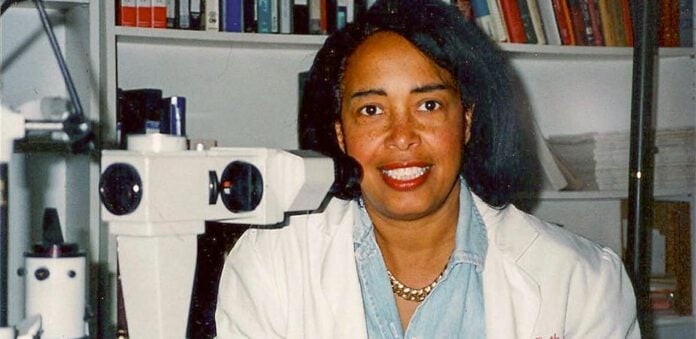
Leading our series is the inspiring story of Dr. Patricia Bath, a visionary ophthalmologist and inventor whose innovations have transformed the field of eye care.
She was the first African American woman to complete a residency in ophthalmology at New York University; the first female faculty member of the UCLA Jules Stein Eye Institute; the first female African American doctor to patent a medical device; inventor of Laserphaco cataract surgery, and the co-founder of the American Institute for the Prevention of Blindness.

Bath’s academic career
Born 1942, in Harlem, New York, Patricia Bath was the daughter of Rupert and Gladys Bath. Her father was an immigrant from Trinidad, a newspaper columnist, a merchant seaman, and the first black man to work for the New York City Subway as a motorman. Her African-American mother, encouraging her dreams and love of science, had bought her her first chemistry set.
By the time she had reached high school, Bath was already a National Science Foundation scholar. This led to her cancer research earning a front-page feature in the New York Times.
She conducted pioneering research on the effects of streptomycin residue on bacteria, concluding that cancer is a catabolic disease and that tumor growth is a symptom. Her groundbreaking discoveries, including a mathematical equation to predict cancer cell growth, were recognized by the head of her research program and published in a scientific paper. These findings were also presented at the International Fifth Congress of Nutrition in 1960. That same year, at just eighteen, Bath won a “Merit Award” from Mademoiselle magazine for her contributions.

Bath earned her Bachelor of Arts in chemistry from Hunter College in 1964 before attending Howard University College of Medicine in Washington, D.C. She co-founded the Student National Medical Association and became its first female president in 1965.
Bath served her residency in ophthalmology at New York University, from 1970 to 1973, the first African American to do so. She gave birth to her daughter, Eraka, in 1972.
Patricia Bath: Giving sight to millions
Returning to Harlem, Bath interned at Harlem Hospital Center, which had recently affiliated with Columbia University College of Physicians and Surgeons. During her internship, she noted a significant disparity in the number of blind patients at Harlem Hospital compared to Columbia’s Eye Clinic. Before starting her ophthalmology residency at NYU in 1970, Bath received a one-year fellowship from Columbia University to enhance eye care services at Harlem Hospital. Her data on blindness and visual impairment led to her professors performing the first eye surgery at Harlem Hospital in November 1969, with Bath proudly part of the team.

In 1986, Bath conducted research in the labs of Danièle Aron-Rosa at the Rothschild Eye Institute in Paris and the Laser Medical Center in Berlin. Here, she began her groundbreaking work in laser cataract surgery, coining the term “laser phaco” for the procedure.
She developed the laser phaco probe, which revolutionized cataract surgery by using lasers to dissolve cataracts nearly painlessly, irrigate and clean the eye, and facilitate the insertion of new lenses. Bath completed the device in 1986 and received a patent in 1988, making her the first African American woman to receive a patent for a medical purpose. Her invention has since been used worldwide to restore vision to countless individuals.
Dr. Patricia Bath held five U.S. patents, three of which relate to the Laserphaco Probe. In 2000, she patented a method for using pulsed ultrasound to remove cataracts, and in 2003, she patented a method combining laser and ultrasound for cataract removal.
She co-founded the non-profit American Institute for the Prevention of Blindness in Washington, D.C. Through this organization, Bath spread eye care worldwide by providing newborns with free eye drops, vitamins, and vaccinations against diseases that can cause blindness, including measles. Bath claimed her “personal best moment” was while she was in North Africa and using keratoprosthesis, was able to restore the sight of a woman who had been blind for over 30 years.
Bath was recognized for her philanthropic work in the field of ophthalmology by President Barack Obama. In 2009, she was on stage with President Obama and was appointed to commission digital accessibility for blind children.
She died in 2019.