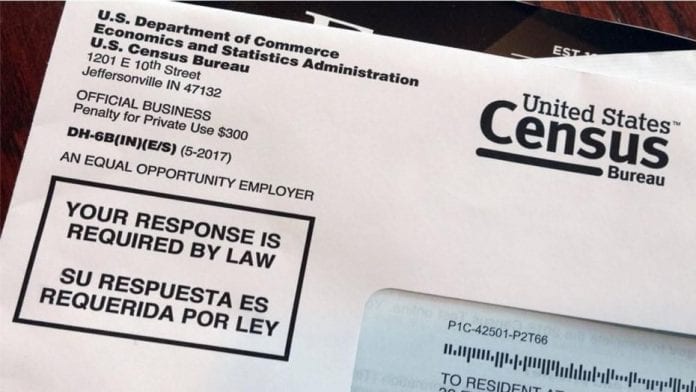
MIAMI, Florida – The next decennial U.S. national survey or census begins on April 1, 2020. This important survey not only counts how many people live in America but determines allocation of federal benefits.

However, there are indications that if a coordinated and effective promotional campaign isn’t maintained until Census Day, April 1, several communities, including the black community, could be undercounted in the census.
Earlier this month, results of a survey conducted by the Pew Research Center found black Americans are roughly twice as likely as their white counterparts to be doubtful about participating in the 2020 census. In the survey, a combined 26 percent of black respondents said they might not, probably would not, or definitely would not, participate in the census, compared to 21 percent of Hispanics who said the same, and 12 percent of white Americans.

Should the results of this survey hold true during next year’s census, it could result in communities with significant black populations, including Caribbean-Americans, being undercounted.
When communities are undercounted in the U.S. Census, it is usually to the detriment of residents, since the census data is used to determine how an annual federal allocation of $800 billion will be apportioned across the U.S. for the next 10 years.
Florida is budgeted to receive $45 billion annually in federal funding, but the amount allocated to respective political districts depends on the population size of the district counted during the 2020 census.
It would be rather unfortunate—after the coordinated community effort to have the Trump administration reverse its plan to place a citizenship question on the census questionnaire—for America’s black population to be undercounted. A primary argument for pushing for the removal of the citizenship question was that it could result in several minority and immigrant communities being undercounted.
According to the Center on Poverty and Inequality of the Leadership Conference Educational Fund, the black population has been historically undercounted in past censuses, disadvantaging families, communities, and neighborhoods. The 2010 Census undercounted the African-American population by more than 800,000. Approximately 7 percent of African-American children were overlooked by that census, roughly twice the rate for non-Hispanic White children; and African-American men have been historically undercounted in greater numbers than men of other racial or ethnic groups.
The reasons given why some aspects of the black population are regarded as “hard to count” tracks in the U.S. Census include poverty, lack of homeownership, and immigration insecurity.
It’s also ironic that although through proper counting of the black population more benefits can be accrued to help the poor, former censuses saw very low participation by low-income individuals. The overburdened poor have little interest in a survey in which they do not understand nor trust the outcome.
Also, in past censuses people who rent homes were harder to count than homeowners. Renters tend to relocate more frequently and are more difficult for census takers to find.
Immigrants who are not citizens tend to be particularly suspicious of the census, fearing the information taken by the government could in some way affect their future residential status.

Besides a serious mistrust for the census, a primary reason for the undercounting of black and other minority communities is ignorance of the benefits derived from the census.
Many programs that impact African- and Caribbean-Americans are dependent on the data derived from the census. It’s this data that allocate federal funding for:
Education and childcare – Helping low-income students to meet state academic standards, assist students with disabilities, assist preschoolers from low-income families to participate in the Head Start program, and help low-income parents obtain childcare so they can work or further their education.
Food and Nutrition – Food stamps and other benefits under the Supplemental National Assistance Program (SNAP), and meals for students under the National School Lunch Program.
Healthcare and Housing – Health coverage for low-income families under Medicaid, and housing assistance under the Section 8 Housing Choice Vouchers Program.
In addition to these benefits, it’s the proper counting of communities through the census that determine the number of political representatives from the community that sit in the U.S. Congress.
It’s vital that South Florida community organizations collaborate with municipalities, like some have already done in joining the Miami-Dade Counts 2020 initiative, to encourage residents to participate in the 2020 Census.
The black community, traditionally one of America’s more economically challenged, often complain about the lack of access to, or inadequacy of federal benefits. It’s important the community be aware if they stand up and are counted in the 2020 Census there’s a better chance more of these benefits will become accessible.