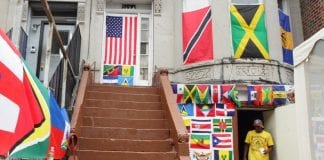
Recently, a media commentator on Black History month referred to the increasing “tribalism of America.” Expounding on his remarks, he said it was rather ironic that people captured from several African tribes were brought to America to boost the nation’s economy, but modern America has itself become a nation of warring tribes.
Reflecting more on this comment, one can understand the reasoning. Modern America has morphed from a nation of diverse, relatively peacefully coexisting groups, into one of radical divisiveness akin to the rabid chauvinism of tribes.
Various American tribes

Today, America is characterized by racial tribes; political tribes; economic tribes; religious tribes; generational tribes; pro-immigration and anti-immigration tribes; and as displayed in recent days pro-gun rights and anti-gun rights tribes.
Fueling this divisive tribalism is the manner with which each group defends itself. Long gone are the days when objective debate was used to defend the believes of one group against another. Today, aided by the rapid interaction of social media, various groups use vitriol, slander, meanness and downright nastiness to defend and accuse those not sharing their believes and opinions. The result is the United States of America is crumbing into a state of disunity that seems beyond repair.
One of the unfortunate circumstance resulting from the recent mass shooting at the Marjory Stoneman Douglas High School in Parkland, Florida is the spotlight it has cast on America’s tribalism.
Student advocates targeted
Although the youth survivors of the shooting have taken the very courageous step to honor the death of fourteen classmates and three staff members by rallying for gun reform, they have been the target of bitter, accusative vitriol by other groups,
But, it’s the youth who once again seem poised to make a change in America, and possible break down barriers that are making the nation seem like one of impenetrable tribes.

History of youth in 1963
In 1963 in Birmingham, Alabama, over a thousand children weary of the degradation and barriers of racial segregation, chanting “Enough is enough” marched out of schools seeking racial justice. Although they were met with powerful gush of water from fire hoses, and set upon by fierce dogs, the youth persevered. The widely televised images of children, 12 – 18 years-old, being beaten, water hosed, and threatened by police dogs, made a difference in a movement that most adults were either scared or reluctant to be involved in. The action of these children some 55-years ago led former President John F. Kennedy to desegregate Birmingham and other Southern regions.
The youth in 1963, were directly responsible for breaking down one of the strongest tribal barriers in America. And, today students in Florida, and other regions in the US, led by courageous students from the Marjory Stoneman Douglas High School are attacking another tribal barrier.
May be harder in 2018
The youth movement for change in 2018 may be harder than in 1963 since the tribal boundaries have strengthened. Moreover, the negative impact of the vitriol spewed through social media may be more powerful than water shot from powerful fire hoses.
In 1963, it was mostly relatively poor black kids that led the march for change. However, the march for change underway by Florida’s, and other youth, is more racially and economically integrated. Fortunately, a positive sign for the de-tribalization of America, todays’ youth is not as racially, politically, religiously, and otherwise divided as their adult generation is.
Youth movement articulate and fearless
This youth movement for reform in America is extremely articulate, and fearless, willing to go face-to-face with politicians, and ‘tribal’ leaders who believe they are invincible. The youth also realize the social media used to target them negatively, can also be used as a positive tool to rally their cause. And, already, they have begun to initiate change.
There are definite signs a powerful youth movement is building destined to eventually break down the tribalism caused by race, economics, religion, immigration, and other social barriers.
A little child will lead them
The religious minded in the community are unhesitant to cite words from the Biblical prophet Isaiah to describe the current youth movement: “The wolf shall dwell with the lamb; the leopard shall lie down with the young goat, and the calf and the lion and the fattened calf together; and a little child shall lead them.”
Again, the youth has grasped the initiative, and its time for adults to follow their leadership to ensure more tribal barriers are broken down in America.