Catastrophic hunger recorded in Haiti for the first time
Key Points(5)
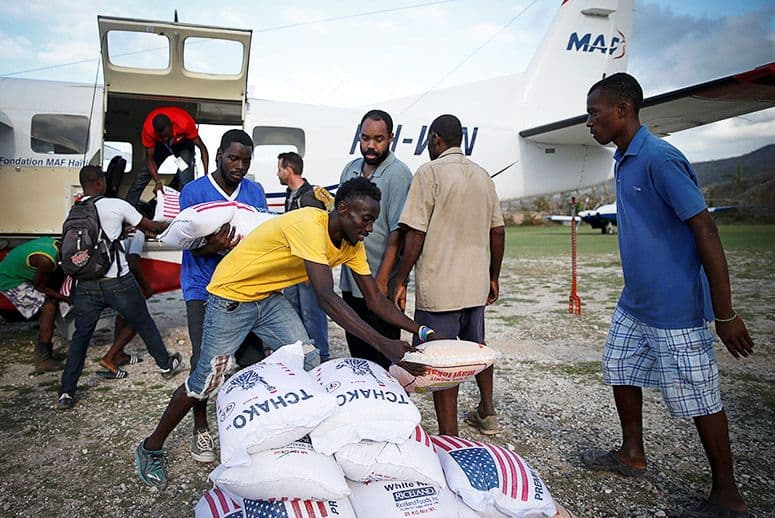
- Two United Nations agencies have warned of “catastrophic” hunger being recorded in Haiti for the first time.
- FAO and WFP said, currently, 65 percent of Cité Soleil’s population, especially the poorest and most vulnerable, are in elevated levels of food insecurity, with five percent of them in urgent need of humanitarian assistance.
- “Increased violence, with armed groups vying for control of the vast and now lawless area of Port-au-Prince, has meant that residents have lost access to their work, markets and health and nutrition services,” the agencies said.
- “Many have been forced to flee or just hide indoors.” FAO and WFP said food security has also continued to deteriorate in rural areas in Haiti, with several going from Crisis to Emergency levels.
- Harvest losses due to below average rainfall and the 2021 earthquake that devastated parts of the Grand´Anse, Nippes and Sud departments, are among the other devastating factors, beyond the political and economic crisis, FAO and WFP said.
Two United Nations agencies have warned of “catastrophic” hunger being recorded in Haiti for the first time.
The Food and Agriculture Organization (FAO) and the United Nations World Food Program (WFP) said “an unrelenting series of crises has trapped vulnerable Haitians in a cycle of growing desperation, without access to food, fuel, markets, jobs, and public services.”
The agencies said hunger has reached a “catastrophic level” – the highest level 5, on the Integrated Food Security Phase Classification index, or IPC – in the capital’s Cité Soleil neighborhood.
According to the latest IPC analysis, a record 4.7 million people are currently facing acute hunger (IPC 3 and above), including 1.8 million people in the Emergency phase (IPC 4) and, for the first time ever in Haiti, 19,000 people are in Catastrophe phase, phase 5.
FAO and WFP said, currently, 65 percent of Cité Soleil’s population, especially the poorest and most vulnerable, are in elevated levels of food insecurity, with five percent of them in urgent need of humanitarian assistance.
“Increased violence, with armed groups vying for control of the vast and now lawless area of Port-au-Prince, has meant that residents have lost access to their work, markets and health and nutrition services,” the agencies said. “Many have been forced to flee or just hide indoors.”
FAO and WFP said food security has also continued to deteriorate in rural areas in Haiti, with several going from Crisis to Emergency levels.
Harvest losses due to below average rainfall and the 2021 earthquake that devastated parts of the Grand´Anse, Nippes and Sud departments, are among the other devastating factors, beyond the political and economic crisis, FAO and WFP said.
“WFP stands with the people of Haiti – serving the vulnerable and helping the poorest,” said Jean-Martin Bauer, WFP country director in Haiti. “We are here to ensure schoolchildren get a nutritious meal each day, families meet their basic food needs and communities are empowered.
“This is a time of tumult in Haiti,” he added. “But there is a way forward. We all need to be steadfast and focus on delivering urgent humanitarian assistance and supporting long-term development.”
José Luis Fernández Filgueiras, FAO representative in Haiti, said: “We need to help Haitians produce better, more nutritious food to safeguard their livelihoods and their futures, especially in the context of a worsening food crisis.
The UN said vulnerable populations, including pregnant women and girls, are the most impacted by restricted access to health services.
“Gangs use sexual violence to instill fear, and alarmingly the number of cases increases by the day,” the UN said.
UNFPA, the UN’s sexual and reproductive health agency, estimates that close to 30,000 pregnant women are at risk of being unable to access essential healthcare, and almost 10,000 could experience life-threatening – if not fatal – obstetric complications without skilled medical assistance.
CMC/