



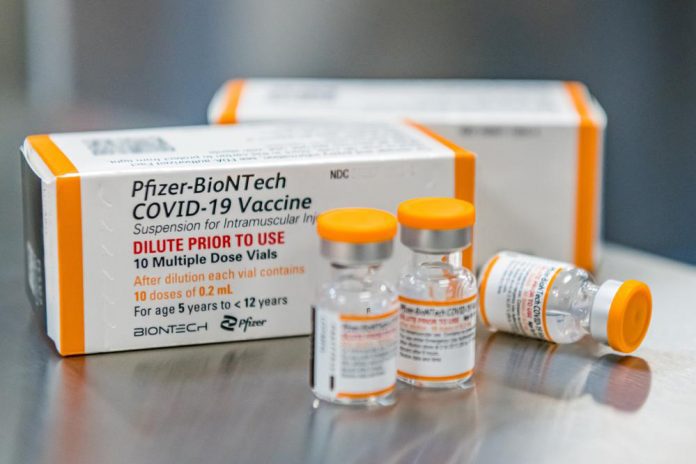
Don’t give children under 12 the adult Pfizer vaccine, is the warning coming from The Caribbean Public Health Agency (CARPHA). This vaccine is the same one that the U.S. Food and Drug Administration (FDA) authorized for emergency use last October.

At that time, the FDA said it based the authorization on a “thorough and transparent evaluation of the data that included input from independent advisory committee experts who overwhelmingly voted in favor of making the vaccine available to children in this age group.”
However, the regional agency has cautioned Health Ministries against administering any vaccine dosage to children aged five to 11 years.

Program Manager, CARPHA Caribbean Regulatory System (CARPHA-CRS) Dr. Rian Extavour expressed concern. In a statement on Wednesday, she said that although the regional health agency recognizes that uptake of the vaccine is critical to achieving maximum protection from severe disease and death, there is an absence of information on testing the adult formulation in children 5-11 years.
Also of great concern, Dr. Extavour said, is the increased possibility of errors in administration with drawing up smaller volumes than 0.3mL, which is the adult dose, from the adult formulation.
“Errors in the administration of fractionated doses can make vaccination of children aged 5-11 years with adult vaccines a risky practice,” CARPHA Executive Director Dr. Joy St. John said.
At the time of authorization for use, the FDA provided some key points for parents and caregivers:
Effectiveness and safety of the vaccine
Immune responses of children five through 11 years of age were comparable to those of individuals 16 through 25. In addition, authorities found the vaccine to be 90.7% effective in preventing COVID-19 in children five through 11.
Researchers studied the vaccine’s safety in approximately 3,100 children aged five through 11 who received the vaccine, and they detected no severe side effects in the ongoing study.

“We are awaiting the WHO [World Health Organization] Emergency Use Listing before we recommend the use of the U.S. FDA-approved vaccine developed specifically for children 5-11 years of age.”
Commenting on the U.S. agency’s authorization, Acting Commissioner Janet Woodcock, M.D. said: “As a mother and a physician, I know that parents, caregivers, school staff, and children have been waiting for today’s authorization. Vaccinating younger children against COVID-19 will bring us closer to returning to a sense of normalcy.”
She continued: “Our comprehensive and rigorous evaluation of the data pertaining to the vaccine’s safety and effectiveness should help assure parents and guardians that this vaccine meets our high standards.”
The Centers for Disease Control and Prevention (CDC) has recommended that children five to 11 years old get the Pfizer vaccine. It said: “There are approximately 28 million children between the ages of five and 11 years old in the United States, and there have been nearly two million cases of COVID-19 within this age group during the pandemic. COVID-19 can make children very sick and cause children to be hospitalized. In some situations, the complications from infection can lead to death.”
But CARPHA-CRS insists that it has not yet recommended the pediatric formulation of the Pfizer vaccine. This, it said, is due to the absence of confirmation of the new formulation by the WHO prequalification team under the relevant Emergency Use Listing (EUL).
“Unless otherwise specified, member states should continue adherence to recommendations for approved vaccines. This will help to ensure favorable benefits to individuals and communities,” Dr. St. John reiterated.











.)