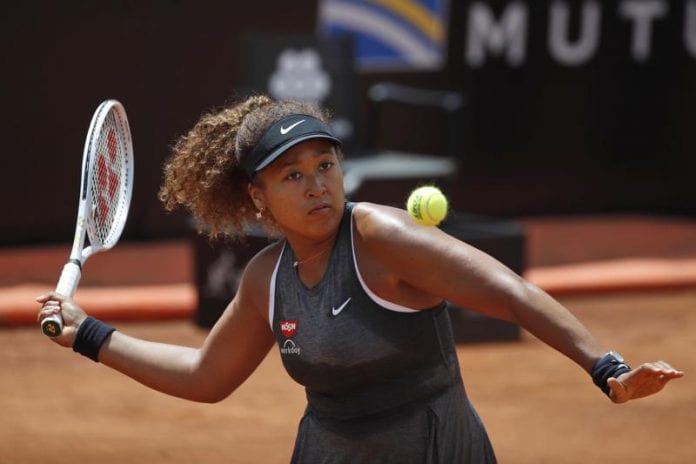
When Haitian-Japanese tennis star Naomi Osaka withdrew from the French Open earlier this week, after revealing her battle with depression and anxiety, it sparked mixed reactions from across the globe.

The 23-year-old, four-time Grand Slam winner had stated before the start of the tournament at Roland Garros that she would not honor the mandatory media commitments as they were detrimental to her mental health and likened the traditional post-match news conference to “kicking people when they’re down”.
She was duly fined US$15,000 and threatened with disqualification from the tournament if she continued to make herself unavailable.

Osaka, the highest-earning female athlete in the world last year, wasted no time and announced her withdrawal from the event, saying she needed some time from the game, which has put her participation at Wimbledon and her Tokyo home Olympics at risk.
Osaka said her mental health struggles began three years ago when she won her first major at the U.S. Open in a final against Serena Williams.
“The truth is I have suffered bouts of depression since the U.S. Open in 2018 and I have had a really hard time coping with that.
“In Paris, I was already feeling vulnerable and anxious, so I thought it was better to exercise self-care and skip the press conferences.”
Mental health is a serious issue in sports, which sadly has been neglected or brushed aside for a very long time. We applaud Osaka for her bravery and boldness in bringing to light a very personal issue, especially during this time with the added pressures of a pandemic and the attending protocols.
It is a conversation that needs to be undertaken in an honest, transparent and professional manner.

Playing professional sports at the highest level is no mean feat. The financial rewards are usually great, but so too are the expectations from not just family and friends, but oftentimes millions of fans who see these sports icons as superhuman and invincible.
History has taught us that Osaka is not an isolated case, and the toughest time to face the traditional post-match inquisitions tends to be after a defeat, especially after a particularly difficult one to take.
Players other than Osaka have avoided media obligations before – world number-one Novak Djokovic beat a hasty retreat from Flushing Meadows after his highly publicized default from last year’s U.S. Open. Others have turned up, only to offer limited answers. We remember Venus Williams and Bernard Tomic, among those who have delivered the ‘yes/no’ approach.
“There’s a sense of voyeurism around how it presently works,” wrote Peter Terry, a professor of Psychology at the University of Southern Queensland in Australia on theconversation.com on Tuesday.
“Perhaps some want to see athletes crumble and break down into tears, having put them on a pedestal. Osaka is a young, introverted, anxious person. We should, by now, understand that sports stars are not superhuman. That they have the same doubts and mental health issues as everyone else.”
Whether or not always being obliged to speak to media remains part of the job is a question now being asked in light of Osaka’s revelations.
The role of the media in promoting sports, building brands and portfolios, laying a platform for revenue generation is not in question. At the end of the day, the media is a key driver of the huge sums of monies earned by pros.
But the pros must be protected at all cost, and it should always be remembered that each individual is made up differently and reacts differently.
It was good to see the four Grand Slams uniting in pledging to “create meaningful improvements” to their tournaments in an effort to avoid a repeat of the Osaka crisis.
“We intend to work alongside the players, the tours, the media and the broader tennis community to create meaningful improvements,” a statement said.
It added that the four Grand Slams “empathize with the unique pressures players face”. However, they added that “change should come through the lens of maintaining a fair playing field, regardless of ranking or status.”
Osaka, too, has accepted culpability in the whole affair and has apologized. She says she wants to work with the authorities, and all concerned to help players experiencing similar issues when she returns.
But her battle with depression echoes similar struggles of other athletes in recent years.
Olympic swimming star Michael Phelps, Spanish footballer Andres Iniesta and England cricketer Marcus Trescothick are just some who have documented their struggles. German goalkeeper Robert Enke and American world track-cycling champion Kelly Catlin took their own lives.
“Depression is a word which has a pejorative connotation, and which is poorly understood by the population,” Professor Philippe Godin, a sports psychologist at the University of Louvain in Belgium, said. “In sport, you have to show that you are strong, almost invincible. So it is not compatible with weakness.”
Coaches and managers are integral members of the support staff, we suggest that it’s time for psychologists to assume an equal prominence in the backroom staff.