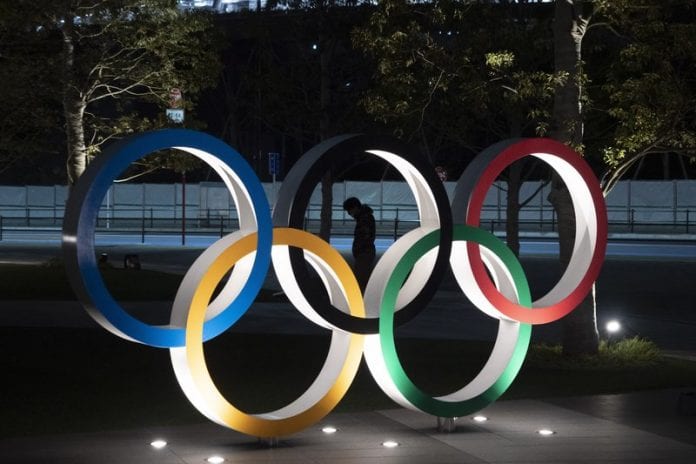
According to the French press agency, AFP, cancelling the Tokyo Olympics in response to mounting public opposition in Japan to holding the Games during the novel coronavirus pandemic would be an unparalleled act in peacetime.

“It would represent a bombshell for the sporting world and have far-reaching and complex financial consequences.
“While the Japanese Government and the International Olympic Committee (IOC) say they are confident they can stage a safe Games, opinion polls in Japan show more than 80 per cent of residents are opposed just over two months before the opening ceremony.”

But there would be severe consequences for a cancellation, especially after COVID-19 forced a postponement from last year.
Who would decide to cancel?
Formally, the host city’s contract signed by Japanese organizers puts that responsibility on the shoulders of the IOC should there be war or civil disorder, or if it deems that participants’ safety is “seriously threatened or jeopardized for any reason whatsoever”.
The IOC, however, has no intention of cancelling, convinced that a safe and secure Olympics can be held for the 11,000 expected athletes in the Japanese capital.
But calls for cancellation have been ramping up in Japan, where concern has been expressed at stretched medical facilities and polls show overwhelming support from the local population for a scrapping of the Games. The vaccination roll-out in Japan has been slow to get off the ground, and national and local elections are also coming into view.
What are the consequences for Japan?
A large part of the Games budget has already been spent. Re-evaluated at the end of 2020 at US$15.4 billion, more than half of this expenditure is made up of public investments in permanent sites around Tokyo.

A cancellation would reduce operating costs linked to the Games themselves: catering, transport, energy, and the rehabilitation of the Olympic Village before it is turned into apartments. But it would also, above all, slash revenues. Japan has already bitten the bullet on missing out on ticket sales estimated at US$800 million due to the ban on foreign fans. A decision is yet to be taken on whether to allow limited numbers of local fans into venues.
Organizers would also be stuck with an enormous bill: a partial reimbursement for local sponsors to the tune of US$3.3 billion, while they would probably have to pay back the IOC’s contribution of US$1.3 billion.
What would a cancellation cost the IOC?
The IOC has never divulged what revenues it expects from the Tokyo Games, the reason being the body only publishes its revenues on a four-year cycle. Revenues in the 2013-16 cycle covering the Sochi Winter Games and the 2016 Rio Summer Games touched US$5.7 billion.
Three-quarters of those revenues come from broadcasting rights, with insiders estimating that the IOC will receive at least US$1.5 billion for Tokyo, a sum it would have to pay back should the Games be cancelled.
The remaining revenues come from international sponsors and cancellation would involve detailed negotiations with each partner on how much they could recoup, the French press agency reports
There is no doubt the IOC, which only keeps 10 per cent of its revenues and has reserves of more than US$1 billion, would be hit hard should it be deprived of this financial windfall.
Also in danger would be the entire sports movement since the IOC finances both National Olympic Committees and international federations — and they are already under the financial crunch because of the coronavirus pandemic.
What would insurance cover?
This remains the principal mystery: since the 2006 Winter Games in Turin, the IOC has been insured against the risk of cancellation, “but it is not known whether the policy remained at the original amount, around US$900m, or was lowered” as the Lausanne-based body’s reserves swelled, according to Patrick Vajda, head of XAW Sports which specializes in risk management and insurance solutions for sports events.
In any case, the indemnity would only cover a part of the potential losses, and there is nothing to say that the Japanese organizers would recoup anything from their side: they have never confirmed that they are covered against a cancellation.
For the president of the Jamaica Olympic Association, Christopher Samuda, the Games must go on and the choice to attend is personal.
At last week’s virtual monthly meeting at The Rotary Club of downtown Kingston where he was the guest speaker, Samuda asked, “Should athletes, therefore, be denied that opportunity for self-actualization and to create earning opportunities?
“Should the Olympic movement capitulate in the wake of this onslaught when its principles impel us to be resilient, determined and steadfast?
“Should the Olympic Movement give in to a viral invasion, or should it continue to take up arms against the enemy in sport in fighting the battle on its way to winning the war? And then, should the IOC and Olympic movement pick wisely the battles to fight in the interest of public safety, for healthy lives matter?”
Samuda said the Japanese government has a battle on its hands in the face of growing public opposition to the Games. “Should, as some are saying, the government of Japan in the face of public polls calling for the cancellation of the games and now protests, select wisely its political battles to avoid disfavor or suicide at the polls or should it stand firm, with clenched fists, on the principle of athletes’ actualization and their coming of age on the greatest international stage of sport?”
He admitted that the decisions were not easy ones and would take bravery to arrive at.
“It’s a delicate balance, an unenviable duty that resides with the decision-makers as to whether to go to war or to retreat. Very early in the game, President (Richard) Bach told a group of us, Presidents, that there is no plan ‘B’. And I thought then that we, therefore, had better be on our ‘A’ game.”