The briefs advise the court of relevant, additional information or arguments that the court might wish to consider. A well-written amicus brief can have a significant impact on judicial decision-making.
The Tri-Caucus includes the Congressional Hispanic Caucus (CHC), Congressional Black Caucus (CBC) and Congressional Asian Pacific American Caucus (CAPAC).

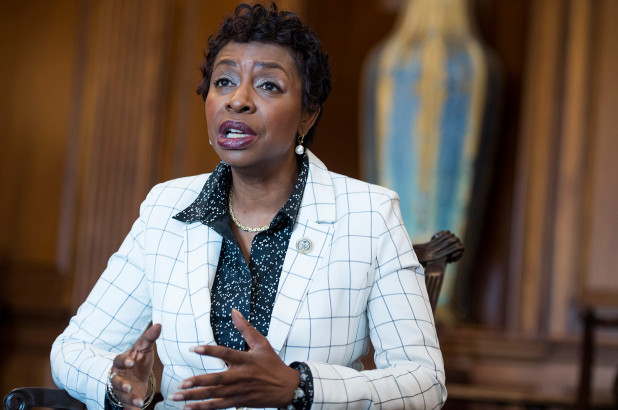
Clarke, who represents the predominantly Caribbean 9th Congressional District in Brooklyn, New York, told the Caribbean Media Corporation (CMC) that the briefs were filed for various cases in the State of California, the State of New York and the Southern District of New York.
The amicus briefs argue that the public charge rule was “written with discriminatory intent against non-white, non-European immigrants and violates both the Equal Protection Clause and the Administrative Procedure Act.”
The brief cites as evidence statements by President Trump and high-ranking officials in his administration and data showing the “disproportionately harmful impact” on Latino, Asian Pacific Islander and Black immigrants, including Caribbean nationals, the public charge rule would have, if it goes into effect.
The public charge rule would expand the definition of who is considered a “public charge” and consequently make it more difficult for Caribbean and other immigrants to come to the United States or receive green cards if they are likely to use benefits they are legally entitled to, such as Medicaid, housing assistance and nutrition assistance.
The rule will go into effect on October 15, 2019, unless a preliminary injunction is granted.
“The Tri-Caucus believes the Trump Administration’s public charge rule was written with the clear intent of intimidating and discriminating against immigrants of colour,” said the Tri-Caucus leaders in a joint statement.

“The rule is yet another attempt by the Trump Administration to create an immigration system that is stacked against non-European, non-white immigrants in favor of the wealthy. If this rule goes into effect, its impact on communities of colour will be staggering.”
Under the rule, immigrants who utilize benefit programs they are legally entitled to or who fail to meet specific income thresholds would have negative factors applied to their applications for admission or requests for changes to their immigration status or classification.
The Tri-Caucus leaders said that within the Latino community, 33 percent of all Latinos in the United States would be negatively impacted, and 81 percent of immigrants from Mexico and Central American would have at least one “negative facto” applied to their application.
Within the AAPI community, the Tri-Caucus leaders said 41 percent of immigrants from Asian countries who are currently recent lawful permanent resident would now have two or more “negative factors” applied to their applications under the rule.
Within the Black community, including the Caribbean community, Black immigrants who face employment and wage discrimination “would be disproportionally at risk for having ‘negative factors’ applied to their applications,” the Tri-Caucus leaders said.
“As a result, we have already heard heart-breaking stories of immigrant families disenrolling from critical programmes their families need due to fears of jeopardizing their future in America.
“The public charge rule embodies the Trump Administration’s blatant and consistent disregard for our nation’s historical commitment to an immigration system that values diversity and the contributions of immigrants from all walks of life,” they added.
“The Tri-Caucus will continue to speak out against this cruelty and fight both through legislation and in the courts to ensure this rule is never implemented.”
Clarke told CMC that “the public charge rule means law-abiding immigrants will be put in an impossible position, having to forfeit health care, nutrition and housing programs in order to get a green card or receive other lawful status.
“Every single one of us has needed help from somebody else at some point in our lives, and this administration has lost sight of this fact with this compassionless public charge rule publication. This rule is a way our administration has yet again bullied immigrants who will now be afraid to seek out essential services to which they are lawfully entitled.
“Where our ‘leader’s’ heart is supposed to be, is instead filled with hatred, bigotry and xenophobia. Trump’s lackeys have followed his savage direction with such a cold disregard for Brown and Black people,” she added.
The Congresswoman said the new rule focuses on hundreds of thousands of Caribbean and other immigrants who enter the US legally annually, then apply to become permanent residents.
But, effective in October, she said Trump’s public charge rule will focus on what it characterized as a wealth test in determining if those immigrants have the resources to support themselves.
They would, therefore, be denied a green card if immigration officials find that they are likely to benefit for government entitlement programs, such as food stamps and subsidized housing, Clarke said.
On the other hand, she said immigrants with more resources and less likely to depend on the system will be issued a green card or permanent resident status.
In making the announcement last month, the United States Citizenship and Immigration Services (USCIS) said that the final rule amends the Department of Homeland Security (DHS) regulations by prescribing how DHS will determine whether an immigrant, referred to “an alien”, is inadmissible to the United States based on his or her likelihood of becoming a public charge at any time in the future, as set forth in the Immigration and Nationality Act.