KINGSTON, Jamaica – It was blatantly ironic that as Jamaica celebrated its 57th anniversary of independence last week, a report was published indicating the nation’s poverty level had increased.

The report contained in Ministry Paper 51, tabled in Parliament based on data from the Jamaica Survey of Living Conditions indicated poverty had increased by 2.2 percent, moving to 19.3 percent compared to 17.1 percent recorded for 2016.
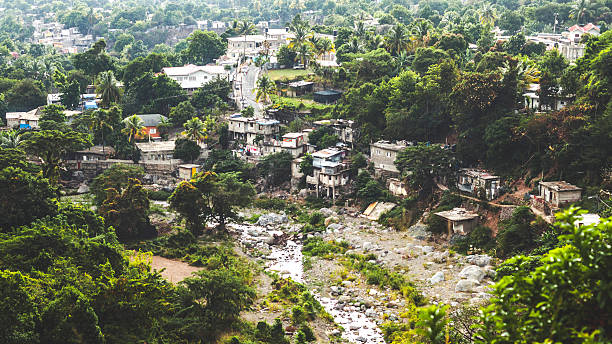
The report further indicated the increased poverty level was worst in the Kingston Metropolitan Area (KMA) where poverty increased by 5.2 per cent, while in rural areas poverty increased by 4.1 per cent.

Translating this sophisticated data into more basic terms, it’s borne out based on the estimated Jamaican population of 2.7 million, 60,000 more Jamaicans fell into poverty since 2016, and over 521,000 of the nation’s population are living in poverty.
It’s interesting to note this report was prepared by the Ministry of Finance, the same ministry that lauded its presentation of Jamaica’s 2019/20 budget highlighting Jamaica’s economic gains, especially the reduction of the national debt.
The report of the worsening poverty levels in Jamaica also follows a glowing report written in a Miami newspaper last June, possibly written to impress hundreds of overseas Jamaicans visiting Jamaica for the biennial Diaspora conference, of Jamaica’s phenomenal economic gains over the last few years.
But these visitors driving around Kingston saw evidence of the squalor in which so many of Kingston’s population live in. The same squalor that motivated many to seek better living standards overseas. Many visited shops and other places of commerce and cringed at having to fork out thousands of Jamaican dollars to pay for a simple meal of a coco-bread, patty with “aerated water” or bottled soft-drink. “How does the poor afford these prices?” many asked.
The answer is the poor isn’t managing, and the poor is increasing. A member of the Jamaican Diaspora who stayed at a New Kingston hotel during the Diaspora conference recalls a conversation with a dining room waitress who indicated despite being employed she was hard-pressed to feed her two children and keep up with her electricity bill in their three-room residence. The waitress said to minimize her electric bill she usually unplugged her refrigerator on leaving her house.
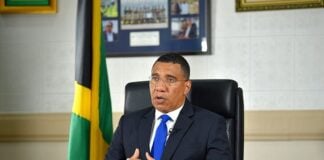
Despite explanations by Jamaica’s prime minister and minister of finance that the current government is successfully combatting properly, this is somewhat disingenuous.

The fact is over 500,000 Jamaicans, a whopping 20 percent of the population, is living in poverty unable to adequately feed, clothe, shelter, educate and secure appropriate healthcare for themselves.
This poverty isn’t new. It’s the same poverty that over the years has bred hopelessness, despair and is the main source of the nation’s crime problems.
It’s very alarming that successive Jamaican governments have been unable to solve the poverty problem. In the 1970s when the then administration took bold steps to alleviate urban and rural poverty it sparked vicious, sustained backlash. The administration was branded socialist, destabilized by local and foreign actors, and ultimately defeated.
Granted, that administration and others since were caught in a vicious trap. Although they recognized and developed plans to alleviate poverty, needed funds were unavailable and when they turned to the International Monetary Fund (IMF), the primary provider of support funding since independence, they are prohibited from implementing projects to alleviate rural and urban poverty.
But beginning around 2015 and continuing since the former People National Party (PNP), and current Jamaica Labor Party (JLP) administrations were able to abide by IMF guidelines which have borne positive economic outcomes, but still, poverty lingers, and have increased.
With the help of the IMF, other multinational financial agencies, foreign governments, notably including the Chinese, Jamaica has implemented major infrastructural projects. Major highways have been built, but bypass communities which became poorer because of building the highways. Does the planning of these projects not consider the implications of poverty for neighboring, displaced communities?
The current government hailed tax-cuts offered in its 2019/20 budget, but tax cuts unrelated to the poor 20 percent of Jamaicans. Why wasn’t there plans to reduce the stiff General Consumption Tax (GCT) on goods mainly purchased by the poor?
The measurement of the government’s economic performance cannot be limited to balancing its financial books to satisfy the IMF. The success of its economic performance is also measured by the elimination of poverty.
Having alleviated several of the major economic problems, the government should be now in the position to implement poverty alleviating programs and projects in the KMA and rural Jamaica. That is, unless these heralded economic gains are only on paper, unable to be practically advanced as economic gains for the general population, including, most importantly, the poor.