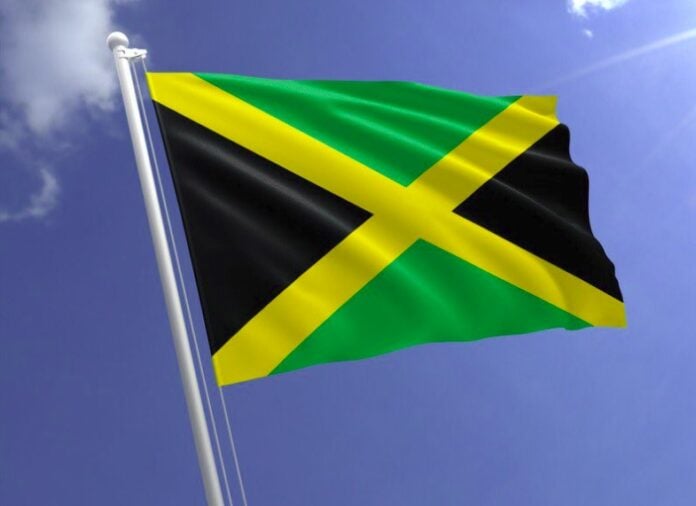
August is historically significant on the Caribbean calendar. August 1, Emancipation Day, commemorates the end of slavery in the British Empire including the West Indies by the Slavery Abolition Act of 1834. August 6 and 31 are anniversaries of Jamaica’s and Trinidad and Tobago’s independence from the British in 1962.
This year Jamaica celebrates its 56st independence anniversary. Like past commemorations of this milestones there will be the usual celebratory events in Jamaica and throughout the Diaspora.
As with the birth anniversaries of individuals, often times the celebrations camouflages the challenges experienced throughout the year and years preceding the anniversary.

Hasn’t been a cake-walk
Reaching the 56th anniversary hasn’t been a cake-walk for Jamaica There have been tremendous challenges, many which were overcome, and challenges which continue to plague the nation.
Some of these challenges, like the national economy and the suppression of criminal violence, have had some, mostly from the older generation, still wondering if it wouldn’t have been more advantageous for Jamaica and other Caribbean nations remain as a West Indies federation. “The challenges are too steep for such small nations,” they claim.
Significant achievements
Thankfully, this is a minority opinion. Despite the challenges Jamaica and Jamaicans have achieved significantly. There’s no doubt despite its small nation status, Jamaica has made its mark on the international scene.
But, there is work, a lot of work, still to accomplish

Since independence, particularly since 2000, Jamaican governments, private sector and people appear more intent on solving the many problems at hand. There is definite evidence that Jamaica is on a mission to achieve social and economic development. However, a moment of objectivity reveals that solving the problems confronting Jamaica isn’t easy. It hasn’t been easy for either of the political parties, the Jamaica Labor Party (JLP) or the People’s National Party (PNP) that has formed the government since 1962. It certainly isn’t easy for the incumbent government.
Various challenges to overcome
Solving Jamaica’s problems has been a struggle because of various factors, many of which are beyond Jamaica’s control. Some include: an increasingly competitive global market; decline in demand for Jamaica’s traditional agricultural exports, and its former top revenue earner, bauxite; decrease in valuable foreign exchange earnings; increase in national debt as governments seek to borrow on the international market to fill the gap from foreign exchange earnings; decline in and high price of obtaining developmental capital; continuous migration of skilled people, and a growing, more youthful population, craving a rewarding future.
Moreover, it hasn’t been easy for the nation, when the best alternative for solving pressing economic problems is to depend on financial assistance from the International Monetary Fund (IMF). Successive governments have had little alternative to entering in funding agreement with the IMF, and coerced into adapting policies that exclude social programs targeted at helping the poor.
Different leaders tried different strategies
Different Jamaican leaders since 1962 have tried different strategies to solve Jamaica’s socio-economic challenges. These strategies included: the strong free enterprise system of the Hugh Shearer administration; the Democratic Socialism experiment of the Michael Manly administration; efforts to create a more technocratic, efficient public sector by the Edward Seaga administration; and efforts to drive Jamaica’s socio-economic development through inflows of foreign investment by the P.J. Patterson administration. None of these methods created long term gains, or solved Jamaica’s perennial problems of capital shortage, high unemployment and poverty.
In Jamaica there has always been a need for meaningful public/private sector collaboration. Fortunately, some analysts believe there are signs this collaboration is taking place; that the incumbent government is listening to and accepting the private sector’s pivotal role in national development. This evidence is seen in areas of finance, tourism, and business development.
As increase in criminal violence remain a persistent challenge, there are calls for closer private sector/government collaboration to curb this social blight.
Diaspora is also responsible
But, the responsibility for solving Jamaica’s challenges is not, should not, be the sole responsibility of its ruling government, private sector and the is three-million residents.
One of the, if not the strongest, asset Jamaica potentially has to solve its challenges is its Diaspora. The Diaspora definitely has the capability to assist in Jamaica’s development in various ways, including investments and application of skills and experiences gained overseas.
While the Diaspora joins in celebrating another Jamaican independence anniversary, it should be ready, willing to be involved in making meaningful contributions. The Diaspora has talked incessantly about assisting the homeland, but relatively little has been done. The best gift from the Diaspora to Jamaica on its 56th independence anniversary is the Diaspora’s commitment to be an integral part of the national solution. The tendency to celebrate Jamaica’s achievements on the outside should be matched by the Diaspora’s diligence in assisting to meet Jamaica’s challenges.