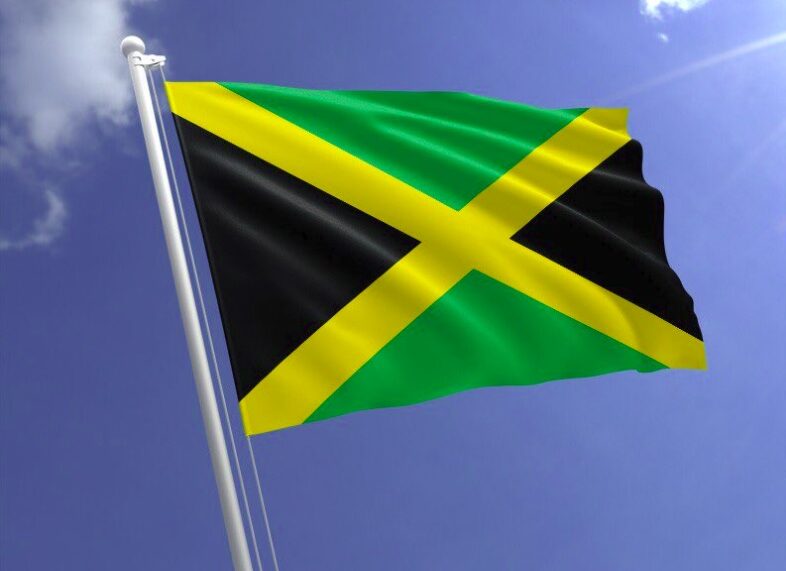
One of the legacies left in the Caribbean by former British colonial masters is the English language. However, this legacy was somewhat unbalanced, depending on access to quality education that native Caribbean people were able to obtain. While the British focused on teaching standard English, the existing system made this possible mainly for urban residents who could attend relatively few public elementary and secondary schools. This resulted in most Caribbean people, particularly those in rural areas, speaking and communicating in local dialects.
Every former British colony has its own indigenous dialects or creole languages, although Jamaican Patois is probably the most internationally recognized and influential.
These dialects developed during slavery and colonialism, when Africans from different ethnic groups communicated with European colonizers and one another. Over generations, new speech forms emerged from blending European languages with African languages, and in some cases Indigenous and Asian influences.

In Trinidad and Tobago, the dialect mixes English with African, French, Spanish, and Indian influences. Barbados dialect is fast-paced and heavily accented, with distinctive pronunciation and grammar. Bahamian dialect has African-American Southern and West African influences. In Belize, Belizean Kriol is widely spoken and is a major marker of national identity. Guyanese Creole varies greatly by region and ethnicity, with African, Indian, Dutch, and Indigenous influences.
Although Haiti is a former French colony, not British, Haitian Creole is fully recognized as an official language alongside French and is spoken by nearly the entire population. It evolved from French mixed with West African languages. Both Dominica and Saint Lucia have French-based creoles often called Kwéyòl or Patois.
Interestingly, Caribbean people can often identify another nationality simply by hearing their dialect. The accents, rhythms, vocabulary, and expressions are very distinctive from country to country.
However, the most widely recognized of the indigenous Caribbean dialects is Jamaican Patois. Today, most Jamaicans—educated and uneducated, upper and lower class—speak it. Although it is widely used, some people still frown upon it, as seen recently in the Jamaican Parliament during comments made by an opposition MP.
There is a strong argument that Jamaican Patois should be formally recognized as an alternative language rather than being treated as “bad English” or informal “street” or “country” speech.
For many Jamaicans, Patois is the first language spoken at home and in daily life. English is often learned later through school, media, and formal institutions.
Linguistically, Jamaican Patois is not simply broken English; it has its own grammar, pronunciation patterns, vocabulary, and expressive structure shaped by West African languages, English, Spanish, and other historical influences.
The controversy around its use in Jamaican society stems from several factors, including the legacy of colonial history; class divisions, where the upper class tends to speak formal English while lower-income groups are more likely to use Patois; and fears that widespread official use could weaken English proficiency.
Nonetheless, Patois permeates all social classes and is central to Jamaican identity. Jamaican music, humor, storytelling, religion, and everyday social interaction are deeply rooted in it. Internationally, Jamaican culture has become globally influential largely through artists such as Bob Marley, whose use of Jamaican dialect helped spread the language worldwide.
The recent controversy in Parliament over an MP’s use of Patois reflects a deeper contradiction. Most Jamaican politicians campaign in Patois because it connects with voters. Yet in formal state settings, “proper” English is often treated as the only respectable language.
This contradictory stance needs to end. Patois will not be eliminated from Jamaican society or the diaspora. Instead of forcing “proper” English alone, it would be more practical for authorities to retain English as the primary official language for international business, law, and diplomacy, while formally recognizing Jamaican Patois as a national language.
In this way, greater use of Patois could be allowed in education, social and traditional media, literature, and selected parliamentary proceedings. With both languages used alongside each other, Jamaica would function as a genuinely bilingual society. This should be embraced from early schooling.
Several countries successfully manage multiple languages or formal dialects without lowering educational standards.
Most Jamaican children enter school speaking mainly Patois and often struggle when first exposed to standard English, which for them functions as a second language. This contributes to difficulties in reading, writing, and achieving passing grades in English. Formalizing Patois could therefore improve early learning and comprehension.
However, there is also concern that because English is a global language tied to migration, tourism, finance, and professional advancement, weak English proficiency could disadvantage Jamaicans internationally. But a confident society can preserve its native language while mastering global English.
Moreover, Jamaican Patois has already spread globally through music, film, and sport.
The Patois debate ultimately reflects tensions between local identity and colonial inheritance, upper-class prestige and popular culture, and local versus global acceptance.
It is time Jamaican Patois is given formal constitutional recognition, similar to Haitian Creole. Patois should not remain culturally dominant while English alone is treated as more prestigious. Both should be placed on equal footing.