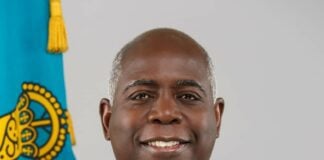
Abortion charges against Dr. Jamil Minnis, son of former Bahamian Prime Minister Dr. Hubert Minnis, were dismissed yesterday, along with charges against the mother and sister of a 15-year-old Harbour Island girl accused of assisting her in ending a pregnancy.

The dismissal came on the first day of Dr. Minnis’s trial before a jury. Prosecutors will now focus on rape charges against 24-year-old Alonzo Pinder, who is accused of impregnating the teenager.
Pinder was charged on September 12, 2023, with having unlawful sexual relations with the girl between July 1 and 31 of that year. In October 2023, Dr. Minnis, the girl’s 45-year-old mother, and 25-year-old sister were accused of “intentionally and unlawfully” causing her to abort a fetus on September 4. Other relatives were also charged with conspiracy to commit abortion, though their identities were withheld to protect the child.

Abortion is illegal in nearly all circumstances in The Bahamas, and prosecutions are rare. The charges against Dr. Minnis, a practising doctor, marked a highly unusual case against a medical professional.
Yesterday, Dr. Hubert Minnis described the past year as “one of the greatest hurdles” of his life and said the ordeal had taken a heavy toll on his son, who was barred from practicing at Princess Margaret Hospital and placed on half pay, although he continued to run his private practice.
“I’ve been going to court in and out for over a year with him,” he said. “The rest of the family, and myself, wife, all of us supporting him, and we were happy this morning to hear that. I as a doctor and a gynaecologist, I looked at the case, and I mean, from my medical perspective, I didn’t think there was a case, but, you know, that’s just my opinion, and I’m very happy. I want to thank God that that is over.”
He thanked the hundreds of people and religious leaders who stood by his family, saying their support and prayers helped him endure the ordeal and refocus on the country’s future.
Reflecting more broadly, Dr. Minnis said the case highlighted the high cost of justice for ordinary Bahamians.
“What this case has made me aware of, court representation is costly, and what it really opened my eyes to is that there are a lot of Bahamians that cannot afford legal representation,” he said. “Therefore, I believe that a lot of individuals may have gone to jail or found guilty because of improper representation, and that is a great disadvantage for the poor and the middle-class individuals because legal representation can be very costly. I think moving forward, that is something I will fight to try and improve on to ensure that every citizen of this country as not only access to proper health care, but at least have access to legal representation.”