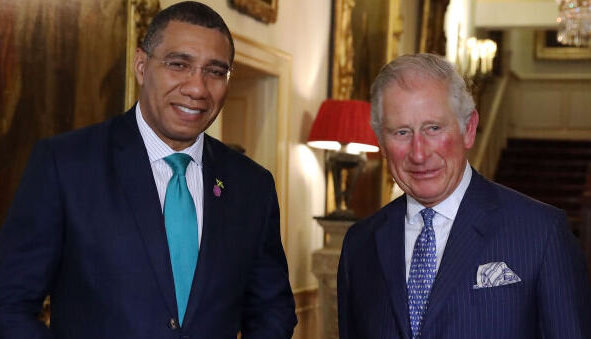
— With critics questioning the pace of Jamaica’s journey toward cutting ties with the British monarchy, Legal and Constitutional Affairs Minister Marlene Malahoo Forte is pushing back — declaring that the island is closer than ever to becoming a republic.
In what she called the most significant post-Independence effort yet, Malahoo Forte reaffirmed the government’s commitment to bold constitutional reform, despite political roadblocks and procedural delays. Key developments over the past two years include the release of the Constitutional Reform Committee’s (CRC) recommendations, the amendment of Section 61 of the Jamaican Constitution, and most notably, the tabling of the Constitution (Amendment) (Republic) Bill, 2024.
“This is the farthest any government has gone towards Jamaica becoming a republic,” Malahoo Forte stated, noting that while significant progress has been made, a more unified political approach could have expedited the process.

Responding to concerns about delays in passing the Republic Bill before the next general election, the Minister explained that the Constitution itself mandates specific timelines that make the process inherently slow and deliberative. These include two separate three-month waiting periods—before debate and before voting—plus time for parliamentary procedures and public approval via a referendum.
After the Bill was introduced in December 2024, a Joint Select Committee began its review in January. However, Opposition members, including the Leader of the Opposition, withdrew from the process after the first meeting due to disagreements about the timing of discussions on Jamaica’s final appellate court—a matter scheduled for a later phase.
Prime Minister Andrew Holness had said that the People’s National Party was sabotaging the process of Jamaica becoming a republic.
Despite this, Malahoo Forte stressed that replacing the British Monarch with a Jamaican President remains a bipartisan national goal. “The reform of the Constitution of Jamaica is among the most significant post-independence work in Jamaica’s history, and it must continue until the goals are achieved,” she affirmed.
Public education around the reform remains a priority, with the Ministry pledging to carry out the work transparently and inclusively, ensuring Jamaicans at home and abroad are informed and engaged.