


Humanitarian groups from the United Nations (UN) have raised serious concerns over Haiti’s vulnerability to natural disasters ahead of the 2025 hurricane season, warning that the country’s limited response capacity could be severely tested.

The six-month hurricane season, beginning June 1, is forecast to be more intense than average across Latin America and the Caribbean, posing a heightened risk for Haiti, the French-speaking Caribbean Community (Caricom) member.
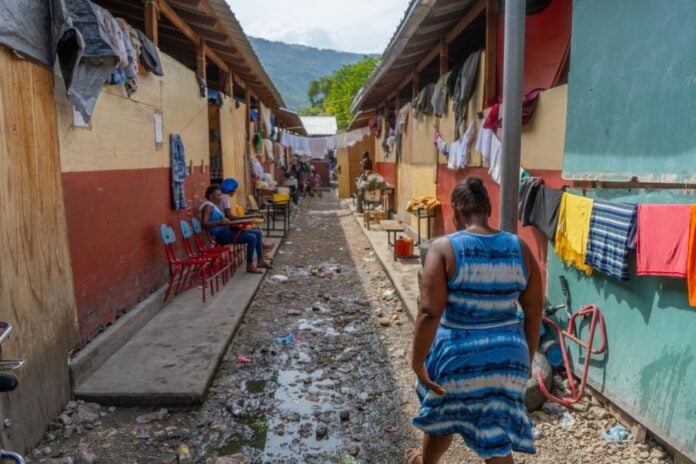
The UN highlighted that Haiti faces multiple challenges, including an ongoing economic crisis, widespread gang-related violence, and rampant insecurity, which have displaced over one million people. More than 200,000 displaced individuals currently reside in camps, many located in flood-prone areas without adequate shelter, drainage, or sanitation.

“These camps leave families acutely vulnerable to storms,” said UN spokesperson Stéphane Dujarric.
The UN Office for the Coordination of Humanitarian Affairs (OCHA) is working with Haitian authorities and humanitarian partners to prepare for the season through contingency planning, risk mapping—especially of displacement sites—and bolstering early warning systems. However, limited humanitarian access and a shortage of pre-positioned emergency supplies remain major obstacles.
Dujarric pointed to funding shortages as a critical issue, stating, “Funding remains a major obstacle” to effective emergency response efforts in Haiti.
The situation is further complicated by security concerns. Elizabeth Riley, executive director of the Barbados-based Caribbean Disaster Emergency Management Agency (CDEMA), said the agency’s activities in Haiti would be limited due to ongoing gang violence and instability.
“The prevailing factor in Haiti at this time is related to security,” Riley explained. “Even in situations where we have no conflict, humanitarian actions are only undertaken when the security situation is stable, and in this regard, I believe that the situation in Haiti would really have to be looked at from the perspective of the situation at the particular time.”
She added that Caricom’s political leadership is actively discussing the situation and providing guidance to CDEMA on potential actions.

“A security assessment would have to be done if Haiti is impacted by any weather system this year,” Riley said, underscoring the complex interplay between disaster risk and security challenges in the country.
As the hurricane season approaches, these warnings underscore the urgent need for coordinated support to strengthen Haiti’s disaster preparedness and response capabilities amid ongoing humanitarian and security crises.









 have raised serious concerns over Haiti’s vulnerability to natural disasters.)