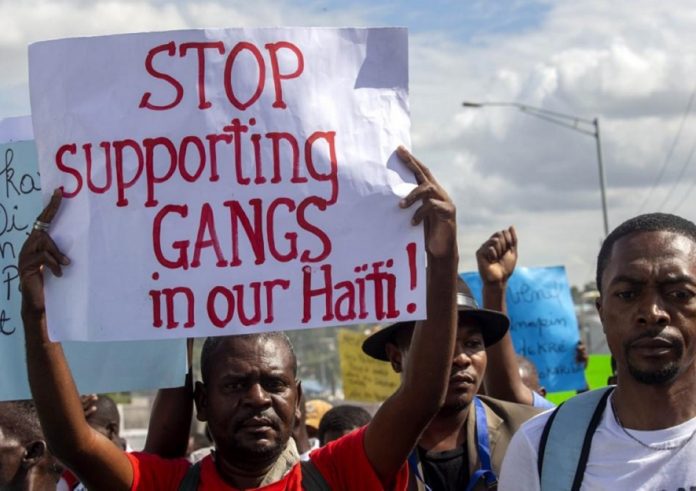
Dozens of Haitians marched through the hilly streets of Port-au-Prince on Sunday, demanding the resignation of Prime Minister Alix Didier Fils-Aimé and the transitional presidential council, as gang violence continues to spiral out of control in the capital.

It marked the latest in a series of demonstrations amid rising public frustration over the growing influence of criminal gangs, which now control approximately 85% of Port-au-Prince, according to United Nations estimates. Sunday’s protest followed a larger gathering on Saturday where hundreds paid tribute to several slain community leaders from the Canapé-Vert neighborhood, one of the few areas in the capital that has resisted gang dominance.
“Freedom or death!” mourners chanted during the memorial, held at a small stadium. Clad in white and with fists raised, attendees honored their fallen leaders, many of whom were killed in recent clashes with armed groups. Some leaders entered the memorial armed and masked, in a show of defiance and self-protection.

“The blood is not going to be shed in vain!” declared one speaker on stage. “The fight is just beginning!”
Canapé-Vert, known for its strong neighborhood organization and ties to former police officers, has become a symbol of resistance. In April, residents there organized a protest that turned violent, underscoring the volatility gripping the capital.
The recent unrest comes amid devastating statistics. From January to March this year, more than 1,600 people were killed and nearly 600 others injured, according to the UN. In 2024, the death toll topped 5,600 nationwide. In the same period, more than one million people have been displaced by the violence.
Gunmen have increasingly targeted neighborhoods that offer strategic pathways to affluent areas like Pétion-Ville, where embassies, banks, and government buildings are located. In one of the most shocking attacks this year, 21 men were gunned down in Delmas 30 in February. In a nearby neighborhood housing the French embassy, at least 30 people were killed while traveling in public minibuses known as tap taps.
The violence has also claimed the lives of police officers’ family members and ravaged rural areas, including Haiti’s Artibonite region, where gangs have slaughtered civilians — including children — fleeing their homes.
Despite the arrival of a long-promised UN-backed multinational police mission, led by Kenyan officers, the response has been hampered by inadequate funding and limited personnel. Only 1,000 of the planned 2,500 officers have been deployed.

In an effort to curb the influence of criminal groups, the United States last week designated two of Haiti’s most powerful gangs — Viv Ansanm and Gran Grif — as foreign terrorist organizations. While the move signals international condemnation, aid groups worry the designation may hamper critical negotiations with gangs to access communities in need of food, water, and medical care.
As pressure builds both domestically and internationally, many Haitians say time is running out.
Reporting by Associated Press.