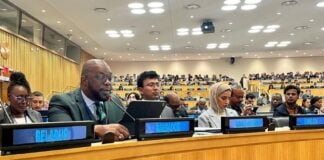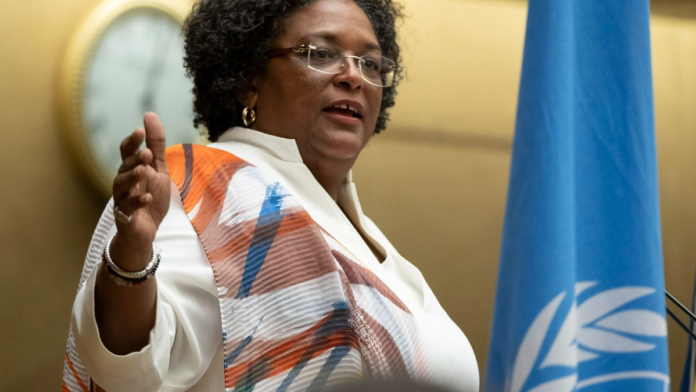
Barbados Prime Minister Mia Mottley has once again urged world leaders to establish an international rules-based order to better equip small island developing states (SIDS) in tackling the worsening impacts of climate change.
Speaking at the Leaders’ Session on Climate and the Just Transition—hosted by Brazilian President Luiz Inácio Lula da Silva and United Nations Secretary-General António Guterres—Mottley stressed that without clear international cooperation and fair systems, SIDS will struggle to manage the growing climate crisis.
“It would not be possible for us to offset the negative consequences of the climate crisis without this,” Mottley said, pointing to the increasing divergence in global views on climate solutions. She also echoed sentiments from the late Pope Francis, who warned against obstructionist attitudes ranging from denial to blind confidence in technical fixes.

As the current chair of the 15-member Caribbean Community (CARICOM), Mottley reminded the conference—attended by leaders like China’s Xi Jinping and France’s Emmanuel Macron—that Caribbean nations and other SIDS remain on the frontlines of climate impacts. She warned that climate-driven disasters often trigger additional crises, and called for intensified efforts at both the national and regional levels, especially when it comes to financing climate resilience.
A key part of the solution, Mottley said, lies in the Bridgetown Initiative—a plan she has championed that calls for reform of the international financial architecture. Designed decades ago without considering today’s pressing global risks like climate change and extreme inequality, Mottley argued that the current financial system is “entirely unfit for purpose” in the modern world.
While Barbados has taken a leading role in advocating for change, Mottley emphasized that the Bridgetown Initiative is a coalition-driven movement for global reform. “It is not an initiative of Barbados alone,” she noted.
Mottley also highlighted another looming problem for SIDS: the skyrocketing cost of insurance. “What is uninsurable is an investment in this modern financial system,” she said, underscoring the urgent need to build resilience at all levels—from individuals in flood- and drought-prone areas to state and regional governments.
At the international level, Mottley proposed establishing a simple mechanism to foster solidarity and share experiences beyond just financing options. She even challenged the global community to aim for a “20 to 40 methane-free world,” suggesting that reducing methane emissions could unite even those traditionally aligned with the fossil fuel industry.
“Our common objective must be to save the planet,” Mottley urged, adding that continued research and inclusive benefits are essential for true progress.