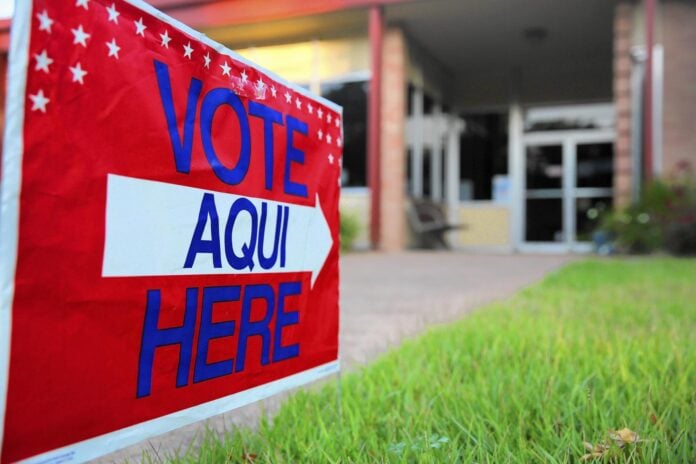
Last week, U.S. President Donald Trump signed an executive order designating English as the official language of the United States. Unsurprisingly, the move has sparked immediate criticism, especially given the country’s linguistic diversity.

According to the U.S. Census Bureau, over 350 languages are spoken nationwide, with Spanish, Chinese, Italian, French, Vietnamese, and Arabic among the most common after English.
For many Caribbean-Americans in South Florida, this decision may seem like a relief, as they often express frustration over the prevalence of Spanish in the region. However, it is important to clarify that the executive order does not mandate exclusive communication in English. Instead, it allows federal agencies and organizations receiving federal funding to decide whether to continue offering services in other languages. This change reverses a mandate by former President Bill Clinton, which required language assistance for non-English speakers.

The White House has argued that establishing English as the official language promotes unity, efficiency in government, and a clearer path for civic engagement. Yet, this perspective overlooks the reality of life in places like South Florida, where Spanish is often the primary language in supermarkets, businesses, hospitals, and professional offices. In such an environment, bilingualism is more than an advantage—it is a necessity.
The inability to communicate in both English and Spanish can be a significant source of frustration for English-speaking Caribbean nationals. If not addressed, this frustration risks fostering xenophobia—a fear of different cultures and languages. History offers a cautionary tale: in 1980, a group called Citizens of Dade United led a successful ballot initiative to make English the official language of what was then Dade County, a move directly responding to the rising number of Spanish-speaking immigrants. The English-only ordinance remained in effect until 1993, when a newly elected Hispanic-majority commission repealed it.
Today, over 50% of South Florida’s population consists of migrants who speak languages other than English, with Spanish being the most prevalent. Similar patterns are evident in states like New York, California, Texas, Arizona, and Nevada. This demographic reality makes it clear that the English-only approach is both impractical and counterproductive. In 2014, attempts by Florida, Arizona, and Texas to pass national English-only legislation were thwarted when President Barack Obama signed an executive order deeming such initiatives unconstitutional, labeling them “anti-American.”
Some argue that opposition to English-only policies is a defensive reaction from immigrant communities struggling with English proficiency. On the other hand, many English-speaking Caribbean-Americans view these policies favorably, believing they could ease the communication barriers they face in predominantly Spanish-speaking areas. However, this mindset is shortsighted and undermines the potential for stronger, more unified Caribbean-American communities in South Florida.
Caribbean-Americans, regardless of their native language—be it English, Spanish, French, or Dutch—share a common history and culture. Embracing bilingualism, rather than resisting it, offers a path to greater community cohesion and economic opportunity. Young Caribbean-Americans, in particular, should be encouraged to pursue bilingual education seriously. Mastering both English and Spanish would significantly enhance their ability to thrive in the local job market and navigate social and professional settings with ease.
While English may be the dominant language of the United States, officially or otherwise, South Florida’s unique linguistic landscape demands a more nuanced approach. Recognizing and embracing the region’s bilingual reality is not just practical—it’s essential for fostering unity and ensuring Caribbean-Americans can fully participate in the community’s economic and social life.

In a nation as diverse as the United States, the notion of a monolithic, English-only society is both unrealistic and counterproductive. Caribbean-Americans must seize the opportunity to become bilingual—not just to adapt, but to lead in a multicultural America.