


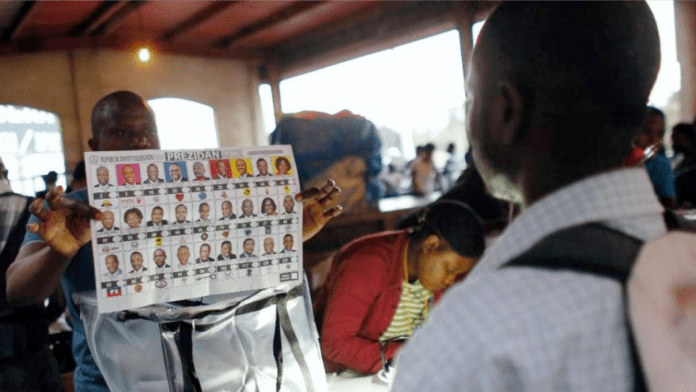
The Belgium-based International Crisis Group (ICG) is cautioning Haiti’s transitional government against rushing into elections, warning that ongoing political infighting and rampant gang violence make a safe vote unlikely.

In a report released Wednesday, “Locked in Transition: Politics and Violence in Haiti,” the ICG argues that rather than setting rigid election deadlines, Haiti should prioritize governance, security, and corruption reforms.
“Holding a safe vote on a new constitution and government by the end of 2025 is unrealistic,” said Diego Da Rin, the ICG’s Haiti analyst. “Instead, the transitional administration should establish clear benchmarks before moving forward with elections.”

Haiti’s Transitional Presidential Council (TPC) chairman, Leslie Voltaire, announced earlier this month that general elections are planned for November 2025, with the goal of transferring power to an elected government by February 7, 2026. However, with gangs controlling much of Port-au-Prince and key roads, the ICG warns that a rushed vote could further destabilize the country.
The report urges Haitian authorities to overcome internal disputes, strengthen security efforts, and work with international partners to ensure sustainable foreign assistance. It also highlights the uncertainty of U.S. funding for the Kenyan-led security mission, which has yet to receive the full deployment of officers and resources.
With no elected representatives since January 2023 and the last elections held in 2016, Haiti remains in political limbo. The ICG warns that unless security conditions improve and governance stabilizes, the road to 2025 elections will remain highly uncertain.
Additionally, the report stresses the need for stronger anti-corruption measures, noting that credibility in Haiti’s transitional government is eroding due to allegations of mismanagement. The ICG suggests establishing a National Security Council and providing the public security secretary with the necessary resources to implement a clear strategy for reducing violence. Without these steps, it warns, any future election could be heavily influenced by armed groups, undermining Haiti’s fragile path to democracy.
The report also cautions that past elections in Haiti have suffered from alarmingly low voter turnout, and current instability could make matters worse. “Staggering the voting schedule or placing polling stations outside gang-controlled territory might allow elections to proceed, but with turnout potentially below 20 percent, as seen in 2016, it would raise serious legitimacy concerns,” the ICG warned. “Gangs could also intimidate voters to ensure their allies take power, further entrenching their influence.”











 is cautioning Haiti’s transitional government against rushing into elections.)