



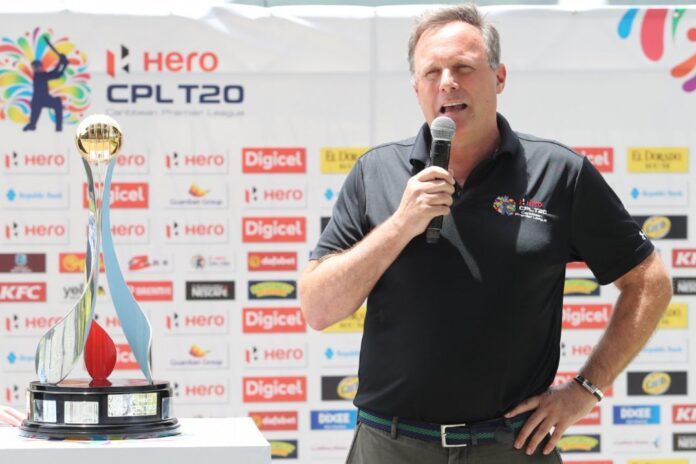
Pete Russell, the chief executive officer of the Caribbean Premier League (CPL), staunchly defended the league’s significant commercial impact on West Indies cricket, emphasizing its status as one of Cricket West Indies’ (CWI’s) “largest domestic, commercial partners.”

Speaking at the Caricom conference on West Indies cricket, Russell addressed concerns and criticisms surrounding the CPL’s financial model and ownership structure.
Russell provided insight into the CPL’s financial state, highlighting its operating costs, investments, and contributions to player welfare. Despite cumulative losses of nearly US$40 million over 11 years, Russell emphasized the CPL’s substantial financial support for player salaries and its role in stimulating local economies across the Caribbean region.

Notably, Russell underscored the CPL’s payment of close to US$17 million in sanction fees to Cricket West Indies over the past 12 years, positioning the league as a significant revenue generator for the governing body. Additionally, Caribbean players have benefited from US$27.7 million in player salaries since the tournament’s inception, funded by CPL franchises.
Ownership isn’t everything
Addressing criticisms of the CPL’s ownership structure and calls for CWI’s control over the tournament, Russell defended the league’s current model, asserting that “ownership isn’t everything.” He argued that successful franchise leagues require third-party investors and smart partnerships to thrive, citing global trends in cricket governance.
Russell pointed to examples such as The Hundred in England, the Big Bash in Australia, and Major League Cricket in the United States, all of which involve external investment to varying degrees. He emphasized the importance of collaboration between governing bodies and investors in driving the success of franchise leagues.
While acknowledging room for improvement, Russell expressed openness to suggestions for enhancing the CPL’s operations. He urged stakeholders to recognize the complexities of commercial viability in professional sports leagues and emphasized the CPL’s commitment to smart stewardship and partnership for sustainable growth.
In conclusion, Russell’s remarks at the Caricom conference underscored the league’s significant contribution to West Indies cricket and defended its commercial strategy amidst criticism, reaffirming the league’s commitment to driving positive outcomes for players, franchises, and cricket stakeholders across the region.











, has defended the league's significant commercial impact on West Indies cricket.)