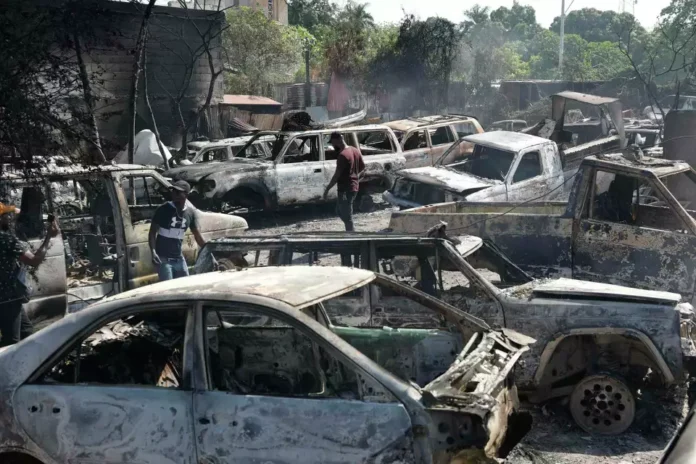
In a dire assessment of Haiti’s current state, the United Nations rights expert, William O’Neill, emphasized the urgent need for international support to address the escalating gang violence plaguing the Caribbean nation.
O’Neill underscored the severity of the situation, indicating that Haiti now requires between 4,000 and 5,000 international police personnel to combat the catastrophic levels of violence targeting crucial institutions and individuals.
Escalating violence demands international attention
O’Neill’s remarks, delivered during a news conference unveiling a UN Human Rights Office report, highlighted the alarming deterioration of security in Haiti.

He pointed out that the situation has significantly deteriorated since his previous assessment, which called for a much smaller international police presence.
The report paints a grim picture of corruption, impunity, and poor governance exacerbating the impact of increasing gang violence, pushing state institutions to the brink of collapse.
Grim statistics reflect deepening crisis
According to the report, gang-related violence has claimed the lives of thousands and injured many more, with a sharp uptick in casualties observed in recent years.
The statistics reveal a staggering toll on Haitian society, with 4,451 fatalities and 1,668 injuries recorded in 2023 alone.
Reports are that up to March 22, have already surpassed previous records, indicating a worsening crisis.
Rise of vigilantism and targeted attacks
Compounding the chaos, the report highlights the emergence of “self-defense brigades” resorting to vigilantism amid the escalating violence.

Instances of lynching have been on the rise, with hundreds of cases reported in recent years.
Moreover, key institutions and individuals, including hospitals, schools, and human rights defenders, have come under relentless attack by gangs seeking to assert control over territory.
Children drawn into violence
An alarming trend documented in the report is the increasing involvement of children in gang activities.
Not only are they exploited as messengers and slaves, but young teenagers are now actively participating in frontline attacks—an unsettling development that underscores the gravity of the situation.
Humanitarian crisis deepens
The spiraling violence has exacerbated the humanitarian crisis in Haiti, with widespread displacement and food insecurity affecting millions.
The closure of essential infrastructure, including airports and roads, has compounded the plight of vulnerable communities, pushing them to the brink of famine.
Urgent call for international support
In light of the escalating crisis, O’Neill reiterated the urgent need for international intervention to restore security and uphold the rule of law in Haiti.
He emphasized the critical role of a multinational security mission in quelling violence and called for tighter controls on the trafficking of weapons to stem the tide of bloodshed.
Hope amidst desperation
Despite the grim circumstances, O’Neill expressed hope for progress, citing efforts to establish a transitional presidential council and secure funding for the international police operation.
However, he underscored the pressing need for swift action, emphasizing that every delay translates to more lives lost and further suffering for the Haitian people.