
Bartlett to Target Jamaican Diaspora for Local Tourism Investments
Key Points(5)
- Typically, emigrants contribute to their home countries through the "five T" channels: transportation, telecommunications, trade, remittance transfers, and tourism.
- But he also believes that the diaspora has not yielded its full potential in avenues of investments on the island.</span></p> <p style="text-align: justify;"><span style="font-weight: 400;">Jamaica's diaspora is among the largest globally and is estimated to be more than three million persons.
- The next largest concentration is in the southern United States (an estimated 450,000), mainly in Miami Metro, Atlanta, Orlando, and Tampa.
- This is a taken-for-granted assumption, as members of the diaspora operate in market spaces that are very competitive.
- Our advantage, however, is that they have identity links to Jamaica," he concluded.
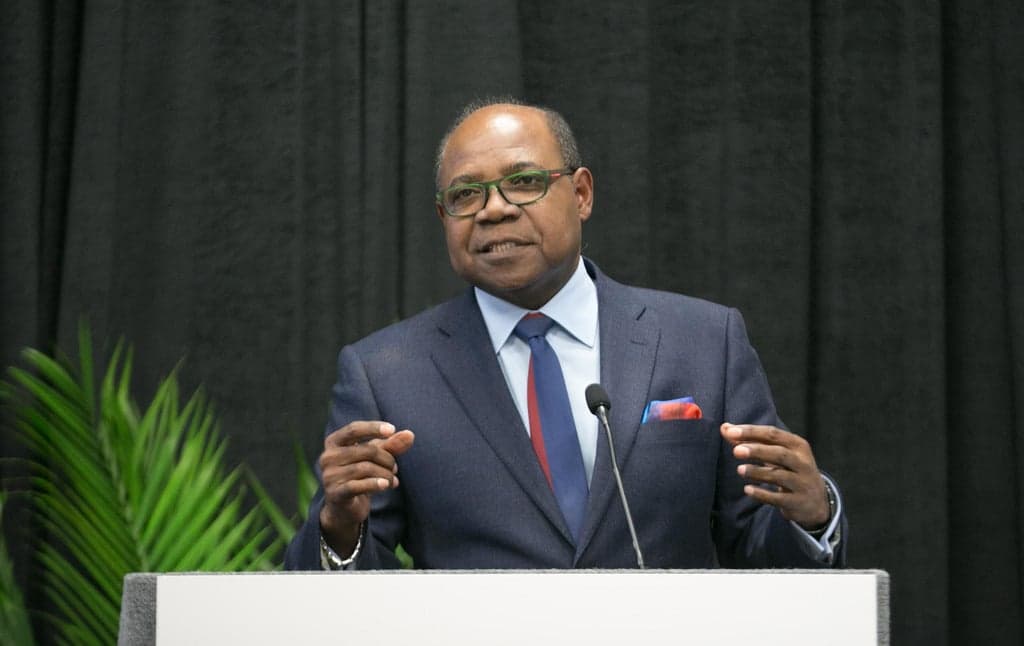
Jamaica's Tourism Minister Edmund Bartlett says his ministry will begin to look seriously at 'diasporic tourism' as a means of accelerating tourism investments in the country.
Addressing the online town hall meeting "Let's Connect with Ambassador Marks" on Thursday evening, the tourism minister said, "Jamaica's sizable and nostalgic diaspora has the potential to be a key driver of growth and diversification of tourism."
"As the diaspora population grows, the acquisition of substantial financial assets creates opportunities for them to return and make investments in the domestic economy as both business tourists and returning residents," Bartlett pointed out.
"It is truly the diaspora that takes Jamaica to the world and the world to Jamaica. Typically, emigrants contribute to their home countries through the "five T" channels: transportation, telecommunications, trade, remittance transfers, and tourism. The potential of Jamaicans living abroad to contribute to sustainable development locally should not be underestimated," he said.
Bartlett observed that "the diaspora is best positioned to market Brand Jamaica to the four corners of the world. It is recognized that the existence of a large diaspora population in global markets, with a ready appetite and affinity for Jamaican culture, products and services offers a ready market for Jamaican businesses and entrepreneurs including those in the tourism sector."
"The diaspora is a major component of our market, and are also major marketers because foreigners are more driven to visit Jamaica by the "word of mouth" and lived experiences of the Jamaicans who they meet than they are by what is advertised on the television or digital or social media platforms such as YouTube," he said.
The tourism minister's comments were in line with Prime Minister Andrew Holness, who had encouraged the Jamaican diaspora last year to take advantage of investment opportunities on the island.
While addressing a virtual diaspora symposium last year, Prime Minister Holness noted that while the tourism sector suffered billion-dollar losses due to the COVID-19 pandemic, Jamaica maintained its foreign currency cash flow because of the diaspora's contribution to their loved ones on the island.
Beyond sending remittances, Holness said the diaspora continues to promote trade, establish businesses, and spur entrepreneurship on the island. But he also believes that the diaspora has not yielded its full potential in avenues of investments on the island.
Jamaica's diaspora is among the largest globally and is estimated to be more than three million persons. The United States, particularly South Florida, New York, and Atlanta, is home to more than half of the diaspora with approximately 1.8 million Jamaicans.
Jamaican expatriates are most extensive in the northeast United States (an estimated 1.1 million), including Maryland, New Jersey, New York, and Connecticut. The next largest concentration is in the southern United States (an estimated 450,000), mainly in Miami Metro, Atlanta, Orlando, and Tampa. According to Minister Bartlett, the minor concentration is in other areas, including the west and midwest (an estimated 150,000), with most persons living in Los Angeles.
"To unlock the power of the diaspora, we need to move beyond the tendency to assume that diaspora tourists will always come, that we don't have to market to them, that we don't have to entice them, and that we don't have to plan for them. This is a taken-for-granted assumption, as members of the diaspora operate in market spaces that are very competitive. Our advantage, however, is that they have identity links to Jamaica," he concluded.
In celebration of Jamaica's 60th year of independence, the Jamaican government has partnered with local hoteliers to offer sixty Jamaican couples in the diaspora the opportunity to enjoy a vacation on the island between mid-August and mid-December. More details about the initiative will be shared later.


