Ever dreamed of seeing Everest but dread the crowds, chaos, and cost of peak-season trekking? You’re not alone. For many travelers, the idea of sharing narrow trails with hundreds of others or fighting for space in packed teahouses can take the magic out of the Himalayas.

That’s where winter steps in, quiet, crisp, and utterly spectacular. Visiting Namche, Tengboche, and Dingboche in winter offers a rare chance to experience Everest without the rush. The trails are peaceful, the skies often clearer, and the villages more welcoming. You’ll find solitude, authenticity, and a different kind of adventure, one that’s just as breathtaking, but far less traveled.
If you’re drawn to quieter, less-crowded Himalayan adventures, you might also consider the Manaslu Circuit Trek, another incredible route that remains serene and uncrowded, even during busier seasons. Like Everest in winter, Manaslu offers raw landscapes, authentic village life, and a feeling of remoteness that modern trekkers rarely find.

This guide helps you understand exactly what a winter trek to the Everest region feels like, how to prepare, what to expect, and why this season might just be the best-kept secret in Himalayan travel.
Why Visit the Everest Region in Winter?
Avoiding the Crowds and Embracing Solitude
Winter trekking in the Everest region is a drastically different experience from the busy spring or autumn rush. While peak season is defined by long lines of trekkers and crowded lodges, winter strips away the noise, revealing the true stillness of the mountains.
One of the biggest perks? Solitude. The trails are quiet, allowing you to walk for hours without another soul in sight. You’ll feel more connected to the land, to the journey, and to yourself.

What Makes Winter So Special?
- Fewer Crowds:Enjoy peaceful trails and quiet tea houses.
- Crisp Mountain Views:Dry, clear air reveals Everest, Ama Dablam, and Lhotse in striking detail.
- Cultural Connection:Locals are more relaxed and open to conversation during the off-season.
- Lower Costs:Accommodation and food are often discounted.
Culturally, winter is a slower, more reflective time in the Khumbu. You’ll likely share a cup of tea with a Sherpa lodge owner or join locals around a fire in the evening, moments often missed during busier months.
Just keep in mind: temperatures drop sharply, and not every lodge stays open. But if you’re ready for the challenge, the rewards of a quiet, intimate Everest trek are unforgettable.
Namche Bazaar in Winter
The Heart of the Khumbu—Blanketed in Snow

Namche Bazaar (3,440m) is the bustling gateway to Everest Base Camp Trek. In winter, it transforms into a tranquil amphitheater of snow-capped houses and frozen waterfalls.
How Cold Does It Get?
Expect daytime temperatures around 0°C–5°C (32°F–41°F) and nighttime lows between -6°C to -15°C (21°F–5°F). The cold bites hardest in the mornings and evenings, so layering is essential:
- Base: moisture-wicking thermal wear
- Mid-layer: fleece or down jacket
- Outer: waterproof shell
- Plus insulated gloves, hat, and thermal socks
Good waterproof boots and gaiters will help you handle icy trails.
What’s Open in Namche During Winter?
Many tea houses stay open, though with smaller menus and limited staff. The Saturday market still runs, but on a smaller scale. Trekking shops and bakeries open later in the morning to save energy.
Tip: Withdraw enough cash in Kathmandu or Lukla, ATMs in Namche may not always work in winter.
Acclimatization Is Still Crucial
Even in the cold, altitude sickness is a risk. Spend at least two nights in Namche to acclimatize. Take short hikes to:
- Hotel Everest View (3,880m)– for a panoramic breakfast with Everest in sight
- Khumjung & Khunde Villages– to experience local Sherpa life
- Namche Monastery– a quiet place to meditate amid prayer flags and snow
Tengboche in Winter
Peace at the Foot of the Monastery
Tengboche (3,867m) is home to the most famous monastery in the Khumbu, and visiting it in winter is a serene, almost spiritual experience.
The Tengboche Monastery Experience
Yes, the monastery remains open in winter, and without the tourist rush, it feels more sacred. If you time your visit right, you can witness the monks’ chanting sessions echoing through the icy air.
Etiquette:
- Remove shoes before entering
- Dress modestly
- Ask permission before photographing
The Trail from Namche to Tengboche
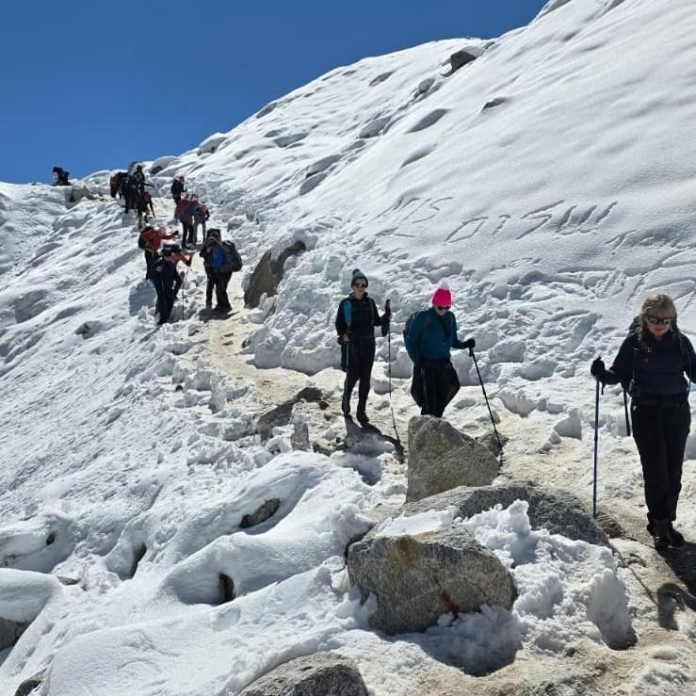
The path is stunning but slippery. Snow blankets the rhododendron forests, and the final climb from Phunki Tenga is often icy. Trekking poles, microspikes, and waterproof boots are essential.
Despite the challenge, this section is one of the most rewarding. The view of Ama Dablam from Tengboche, especially in winter’s clear light, is unforgettable.
Where to Stay
Fewer lodges are open, but the ones that are offer cozy hospitality. Expect simple meals (dal bhat, soup, noodles) and communal dining rooms heated by a central stove. Bring a four-season sleeping bag and a hot water bottle for warmth.
Dingboche in Winter
Silence at 4,410 Meters
Dingboche is often quieter than anywhere else on the route, and in winter, it feels like another world.
Getting There
The trail from Tengboche passes through Pangboche and usually takes 6–7 hours in winter conditions. Snow and ice can slow progress, so start early. Hiring a local guide helps with navigation and ensures safety.
Why Dingboche Is Magical in Winter
For seasoned trekkers, this is pure paradise. The village sits under the watchful eyes of Ama Dablam, Lhotse, and Island Peak, their summits glowing orange at sunrise.
Acclimatization hikes to Nangkartshang Peak (5,083m) are doable if the weather cooperates. It’s steep and snowy but offers panoramic views of Makalu and the Imja Valley.
Expect bitter cold at night (down to -20°C / -4°F), but also unmatched peace. If you’re prepared with proper gear, Dingboche offers a level of solitude you won’t find anywhere else.
Essential Winter Trekking Tips
How to Prepare for a Winter Trek to the Everest Region
- Pack for extreme cold: down jacket, four-season sleeping bag, insulated gloves, gaiters, microspikes.
- Hire local guides and porters—they know safe routes and weather shifts.
- Watch for signs of altitude sickness; acclimatize gradually.
- Start early each morning to avoid walking in the dark.
- Check weather forecasts daily (via MeteoNepalor lodge owners).
Conclusion
Visiting Namche, Tengboche, and Dingboche in winter reveals a side of the Himalayas few ever see. It’s a quieter, more personal experience, where the crunch of snow replaces chatter and the mountains seem to breathe beside you.
Yes, it’s colder and tougher, but that’s what makes it special. You’ll find peace, reflection, and raw beauty that the busy seasons often hide.
So lace up your boots, pack your thermals, and head north when the trails are silent. Everest in winter isn’t just a trek, it’s a meditation in motion, a reminder that adventure doesn’t always need a crowd.